Food Storage and Kitchen Organisation
Containers for Storing Dals and Pulses in India
Choose a dry-pulse container around the amount of each ingredient you keep and how you retrieve it. A litre figure is only one part of that decision. The exterior must fit your shelf, the opening must suit refilling and measuring, and the lid's care must suit your routine.
2 products · Compare before you buy
Product comparison at a glance
| Product | Capacity and access | Size and care | Main purchase consideration |
|---|---|---|---|
IKEA 365+ 101.340.23 | 1.3 L; whole lid removes for filling, half opens for pouring | 17 × 8 × 18 cm; upper-basket dishwasher, maximum 70°C; wash before first use | Opening dimensions, seal care and pulse mass fit unresolved; temperature limit is not heating permission |
Tupperware Smart Saver, one piece | 2.3 L; oval transparent body; dry pulses/lentils use; stacking/nesting described | Exact model code, dimensions and component care not established | Larger nominal volume does not establish shelf or packet fit; marketplace body/lid revision unresolved |
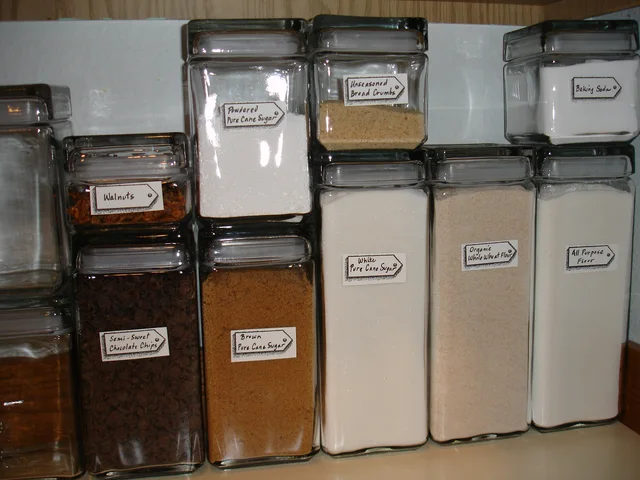

Start with IKEA when its documented narrow footprint and pouring lid suit your working quantity. Compare Smart Saver when you need more nominal volume, after confirming its shelf dimensions and cleaning instructions.
This guide concerns dry dals and pulses in a pantry. A container selected for that task has not thereby been verified for carrying cooked dal, reheating a meal or refrigerator storage.
Make an ingredient list before choosing a set
List the dals and whole pulses you actually buy, then record the usual packet size and the amount normally left before the next purchase. Keep those quantities separate for each ingredient. A set's total capacity does not tell you whether its individual containers suit your toor dal, moong dal, chana dal or rajma quantities.
Use your own shopping history instead of a universal family-size estimate. Two households with the same number of people may buy different ingredients and refill at different intervals. Include occasional-use pulses as well as frequently used ones so you do not buy identical large containers for every item automatically.
For a practical worksheet, record ingredient, normal working quantity, measured volume, candidate capacity, shelf position and access method. Leave an unknown field blank until you have evidence. A smaller candidate is worth considering only when it fits your quantity and routine; it is not inherently a better choice because it looks compact.
Keep volume and weight separate
Nominal litres do not directly prove how many kilograms of a particular pulse fit. The shape and packing of the ingredient, the container's fill guidance and any space you leave for a scoop affect your own arrangement. Neither candidate has a verified one-kilogram dal-fit result in this research.
Measure your intended working quantity in a suitable volume measure where practical, and compare it with the maker's nominal capacity and fill instructions. Do not transfer an approximate weight estimate from rice or flour to every dal. Also account for the remainder of an old packet when planning a new purchase; the worksheet should describe what you really intend to store.
The monthly grocery container sizing guide provides a broader planning method. Retain the original packet's ingredient identification, date and storage instructions so they remain available after any transfer.
IKEA 365+ 101.340.23: a documented pouring design
The official IKEA India page identifies the transparent/white dry-food jar as 101.340.23. Its nominal capacity is 1.3 L. The listed product dimensions are 17 cm long, 8 cm wide and 18 cm high. Its jar is polystyrene-acrylic plastic; the lid specification lists polypropylene and synthetic rubber.
IKEA describes removing the whole lid for filling and opening half for pouring. The care section specifies washing before first use, an upper-basket dishwasher position and a maximum temperature of 70°C. That temperature statement does not establish microwave or other heating permission. Packaging weight is listed separately and is not treated here as the empty jar's measured weight.
Consider this jar when its nominal volume and narrow footprint suit your working quantity and shelf. Exact opening measurements, seal-removal care remain unresolved. Choose another candidate if confirmed scoop clearance or a larger capacity is essential. The documented opening design is not a measured result for pouring your specific pulse without spills.
Tupperware Smart Saver 2.3 L: more nominal volume, fewer verified fields
The official Tupperware India product page names a one-piece Smart Saver with a nominal 2.3 L capacity. It describes an oval transparent body and stacking and nesting, and identifies dry pulses and lentils as intended uses.
Those details make it a candidate to investigate when you need more nominal volume than the smaller jar. They do not establish the shelf footprint, opening size, usable fill level or compatibility with a particular container you already own.
An exact model code, external dimensions, empty weight and component-care instructions have not been established from the reviewed material. Do not choose it for a tightly measured shelf or a specific dishwasher routine until those fields are resolved. The maker's sealing description is not evidence of a guaranteed storage duration or pest exclusion.
Check the opening as well as the closed footprint
Compare the closed dimensions with the clear shelf space and cupboard opening. Include hinges, shelf lips and anything else that intrudes into the route. Then consider where you will remove the lid and refill the container. Standing space and operating space are separate checks.
Decide whether you will pour into a measuring cup or reach inside with a scoop. A photograph showing dry food does not establish the opening's dimensions or how comfortably your chosen scoop fits. Where the opening size is missing, keep that requirement unresolved rather than assuming compatibility.
For a stacked arrangement, determine what must be moved to reach the lower ingredient and where those upper containers will go. A stacking claim alone supplies neither a tier limit nor a load limit. Use the atta, rice and dal shelf planner to sketch the access sequence before selecting a set.
Resolve component care and closure limits
Record cleaning instructions separately for body, lid and any packing or removable parts. Do not apply one product's dishwasher guidance to another product with a similar appearance. Follow the exact instructions for reassembly rather than assuming a seal can be removed and replaced in the same way across brands.
A tight-fitting or airtight description does not prove a particular shelf life, insect prevention or suitability for damaged food. This research supports no home-remedy or food-safety recommendation. Follow the pulse packet's storage guidance, and use the airtight versus regular container guide to distinguish closure features from evidence of performance.
Complete the purchase comparison
For each candidate, confirm the precise model and supplied pieces, match your working volume and access requirements, resolve missing care fields and identify the exact Amazon variant. Current delivery remains unverified; nominal capacity does not establish a tested pulse-pack fit.
IKEA currently supplies more model-specific geometry and care evidence; Tupperware supplies a larger nominal capacity but leaves important fields unresolved. Choose by the volume you need and the dimensions and care requirements you can establish for the exact item.
Manufacturer documentation rechecked on 11 October 2026.
Sources
Read how we choose or report a correction.
Disclosure
Some product links are affiliate links. As an Amazon Associate I earn from qualifying purchases. This does not change the price you pay.
We compare published product specifications and instructions. We have not hands-on tested these products. Prices, stock and delivery can change; check the selected model and current terms before buying.