Food Storage and Kitchen Organisation
Airtight vs Regular Containers for Indian Grocery Storage
For dry grocery storage, shortlist containers with a documented airtight closure when that feature matters to your shopping routine. Then check whether the lid is easy to close correctly, clean and refit. A container described only as “regular” has too little information for a performance comparison: its closure needs checking too.
2 products · Compare before you buy
Product comparison at a glance
| Product | Closure and access | Main buying consideration |
|---|---|---|
OXO POP Round Canister, 11283600 | 4.9 L; maker describes a push-button airtight lid; use the button to open and close | Do not lift by the lid; current-page and family-insert care differ, and exact Indian offer is unverified |
IKEA 365+ dry-food jar, 101.340.23 | 1.3 L; removable lid with a half-opening pouring section; 17 × 8 × 18 cm | Compare for easy pouring; sealing performance is not established by the evidence used here |
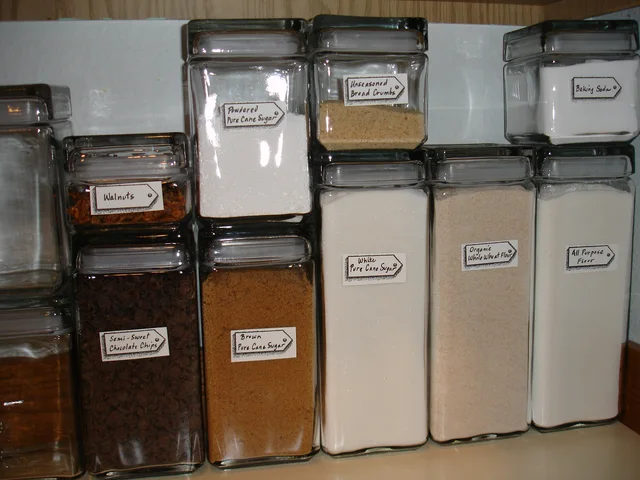

Compare the OXO when a larger dry-food canister with a documented airtight claim suits your needs. Compare the 1.3 L IKEA jar when a narrow, regularly used pouring container fits your shelf. These sizes serve different routines; neither has been independently tested here for freshness or pest exclusion.
Define the two containers before comparing them
“Airtight” is a manufacturer claim about a closure. Record where the exact model's documentation makes that claim and how the manufacturer says to operate it. A gasket or locking clip helps describe the mechanism; its presence alone does not establish measured performance.
“Regular” is not a defined construction. It may refer to a loose lid, a press-fit box, a jar without a separate gasket, or simply an existing container with no surviving instructions. Record the actual design. If documentation is missing, mark seal performance unknown instead of declaring it poor.
Borosil's storage collection links clip-lock or silicone-gasket lids with airtight sealing. That is brand guidance, not an independent test of every listed jar. Use the exact product's instructions to establish the parts and permitted uses.
Compare the claims separately
| Question | Airtight-labelled container | Existing or regular container |
|---|---|---|
| Is the closure claim documented? | Save the exact model statement | Locate instructions or mark unknown |
| How does it close? | Record button, clips, screw or press sequence | Record the actual sequence |
| Can it carry liquid? | Check a separate applicable leakproof claim | Check the same claim; a snug lid is insufficient evidence |
| Can every part be cleaned as intended? | Check body, lid, seal and mechanism separately | Check the same parts that are present |
| Can it fit your groceries and shelf? | Check usable capacity, opening and exterior dimensions | Measure the same things |
Treat vacuum operation, leakproof carrying and heating permission as separate questions. An airtight label alone does not document them. This guide also does not establish a storage duration for atta, rice, dal, spices or snacks. Keep the grocery pack's storage and date information when transferring contents.
Include the lid in the daily routine
Choose a closure you can operate reliably each time you use the jar. Count the steps to release it, reach the scoop, replace the lid and finish closing it. Consider who uses the shelf and whether the container must be lifted down before opening.
For a documentation example, OXO's US page for POP Round Canister SKU 11283600 describes a push-button airtight lid and directs users to use the button when opening and closing. It also says not to carry the container by its lid. A lid that helps opening therefore does not automatically provide a carrying handle. The linked page is the US model record; an exact Indian offer is unverified.
A closure's advertised features should be assessed alongside access. An awkward jar that requires moving several others may add work at every meal. Plan the position before buying a whole set, using the shelf and quantity guides linked below.
Verify cleaning instructions and their version
Ask whether the seal is removable, how it is removed, which parts can be washed by each method and how they are reassembled. Follow the model instructions rather than pulling apart a mechanism by guesswork. Check whether matching replacement parts are actually identified; do not assume another lid or ring of similar size will fit.
Borosil's collection guidance describes separate cleaning of the Classic jar's removable silicone ring. However, the linked Classic product page has an SS-lid title while its included-components and care text refer to a plastic lid. That conflict leaves the exact lid unresolved. Collection guidance cannot settle it.
OXO also illustrates why revision matters. Its POP Round family instruction insert separates gasket cleaning from the other parts and describes washing, drying and correct reassembly. The current product page gives a dishwasher-safe statement, while the family insert directs hand washing for parts other than the gasket. We have not established whether that insert applies to the current SKU. Obtain the instructions supplied with the exact version instead of combining the two permissions.
Decide whether the new container earns its shelf space
Before replacing your existing boxes, compare one with the proposed purchase. Record the ingredient, normal quantity, usable opening, complete shelf footprint, closure sequence, cleaning steps and available documentation. Mark unanswered questions explicitly.
For example, a proposed jar may have a documented airtight claim but unresolved lid-cleaning instructions. Your existing box may fit well and be easy to open, but have unknown sealing performance. Neither record supports a measured freshness winner. Resolve the important gaps before deciding whether the proposed change is worth its extra work and cost.
A practical shortlist should have clear model-specific closure instructions, workable access and cleaning directions you can follow. That supports a purchasing decision; it does not demonstrate how much longer any food will last.
Related planning guides
- Choose container sizes from your grocery quantities
- Plan an atta, rice and dal storage shelf
- Compare glass and steel container component permissions
Product documentation rechecked on 11 October 2026.
Sources
Read how we choose or report a correction.
Disclosure
Some product links are affiliate links. As an Amazon Associate I earn from qualifying purchases. This does not change the price you pay.
We compare published product specifications and instructions. We have not hands-on tested these products. Prices, stock and delivery can change; check the selected model and current terms before buying.