Kitchen Tools and Food Preparation
Wooden vs Plastic Chopping Boards for Indian Kitchens
Choose a chopping board by the cleaning routine you can follow, the foods you prepare and the space available for cutting, washing and drying. A plastic board with documented dishwasher permission can suit a dishwasher-based routine. A wooden board may suit you when you are prepared to follow its particular washing, drying and maintenance instructions. Neither material name is a substitute for a clean board in suitable condition.
2 products · Compare before you buy
Product comparison at a glance
| Product | Material and size | Care | Main purchase consideration |
|---|---|---|---|
IKEA FASCINERA 805.033.61 | Oiled solid acacia; 28 × 19 × 1.8 cm | Handwash only; wash before first use; food-approved oil before use and at regular intervals | Irregular outline is not a full rectangular working area; no measured hygiene or knife-wear advantage |
IKEA LEGITIM 505.567.04, two-board set | Polyethylene; 17 × 12 × 0.5 cm and 24 × 17 × 0.5 cm | Dishwasher permission with 70°C limit; wash before first use | Do not use if heat has warped, softened or deformed it; compare programme limits and required working area |
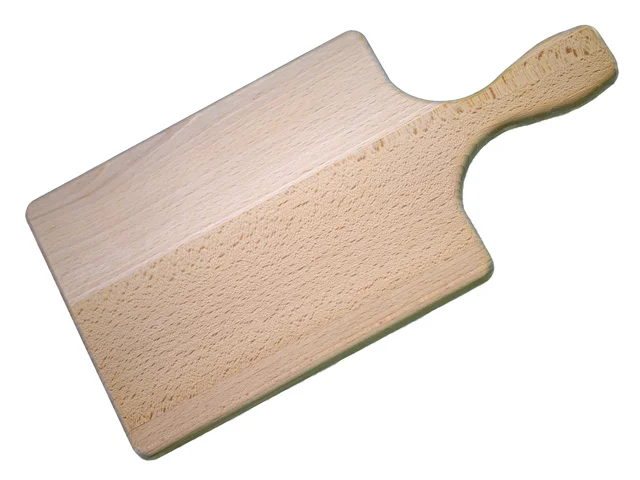

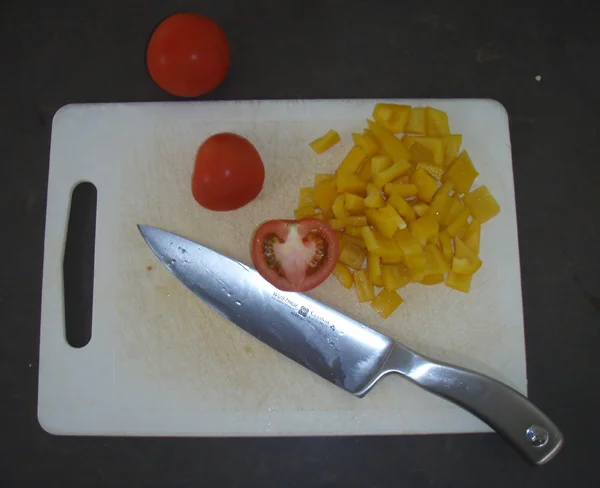

Choose LEGITIM when its small sizes and permitted dishwasher programme match your routine. Consider FASCINERA when you want an acacia board and can commit to handwashing and the specified oil treatment. Neither has a measured advantage here for hygiene, knife wear or service life.
Compare the same questions
| Decision factor | Wooden board | Plastic board |
|---|---|---|
| Cleaning permission | Check the exact construction and manual; do not infer dishwasher suitability | Check the specific product's permission and temperature limits |
| Maintenance | May include documented oil treatment and moisture restrictions | Check instructions for wear, deformation and permitted cleaning methods |
| Size and handling | Compare actual dimensions, thickness and ease of lifting | Compare the same measurements; “lightweight” needs a supported weight |
| Working surface | Inspect flatness, condition and the area available for the task | Inspect flatness, condition and the area available for the task |
| Food separation | Plan which foods use which board | Follow the same separation plan |
| Purchase decision | Useful when its care routine and working dimensions suit you | Useful when its care routine and working dimensions suit you |
The table deliberately leaves performance claims open. There is no controlled comparison here supporting a universal winner for hygiene, durability or knife sharpness. A thick wooden block and a thin plastic board also differ in more than material, so comparing them without accounting for construction can be misleading.
Cleaning and separation come before a material verdict
The University of California Agriculture and Natural Resources handout advises choosing a hard, smooth surface without deep grooves. It recommends separate boards for raw meat, poultry and seafood versus fruits, vegetables and bread where possible. It also calls for cleaning and sanitising after use and before changing foods, with washing, rinsing and drying steps. Source: UC ANR Cutting Board Safety
That is food-handling guidance, not a product certification or an Indian regulatory claim. Apply an appropriate cleaning and sanitising method compatible with your board and the cleaning product's instructions. A colour-coded set can help your household remember its assignments, but colour itself does not clean a surface.
Write the assignments in plain language if several people cook. For example, identify the board used for raw meat separately from the one used for ready-to-eat salad preparation. Do not rely on memory of which face was used last. In a kitchen without raw meat, cleaning between food tasks still matters.
Wooden boards: read the construction and care details
The FASCINERA 805.033.61 India page provides a specific wooden candidate: oiled solid acacia, 28 × 19 × 1.8 cm. IKEA specifies washing before first use, handwashing only and food-approved oil treatment before use and at regular intervals. Its shaped outline means the outside dimensions are not a promise of a rectangular cutting area. These facts support a care and footprint comparison with LEGITIM, not a tested material ranking.
“Wooden” can describe different products and constructions. Ask what the actual board is made from, how it is finished and which care document belongs to it. A product that merely resembles wood should not inherit another board's instructions.
As a documented example, IKEA's PROPPMÄTT manual calls for oil approved for food contact before first use. It warns against soaking or prolonged moisture and says to dry carefully without using high heat to speed the process. These instructions illustrate an ownership commitment that should be considered before buying. Source: PROPPMÄTT manual, English page 4
This manual is a care example, not proof of current Indian stock or instructions for every wooden board. Obtain the correct document for the product you select. If you do not want the specified maintenance or have no suitable drying location, that is a reason to choose a different board, regardless of its appearance.
Do not assume that an attractive serving-board photograph establishes suitability for your cutting task. Confirm the intended use, usable surface and care requirements. Likewise, an oil treatment is maintenance, not a replacement for cleaning.
Plastic boards: useful permissions still have limits
IKEA India's LEGITIM 505.567.04 set provides a concrete example. The page lists polyethylene boards measuring 17 × 12 × 0.5 cm and 24 × 17 × 0.5 cm. It permits dishwasher cleaning, states a 70°C limit and says not to use a board that is warped, softened or deformed by heat. Source: IKEA India LEGITIM
Use all those conditions together. IKEA also instructs owners to wash these boards before first use. Dishwasher permission does not mean unlimited heat exposure or suitability for every programme. Check your appliance's programme information against the board instructions. This example also does not establish that every plastic board has the same care limits.
The dimensions may suit a small preparation task, but we have not tested them with your ingredients. Ask whether the board offers enough usable area for the cut and for moving the prepared food. Do not infer a serving count from its length, and do not use packaging weight as net product weight.
Measure the whole route through the kitchen
Check three locations before selecting a size: the preparation area, the washing space and the drying/storage position. A board that covers most of your counter may leave little space for ingredients and the receiving bowl. A board that fits the counter can still be awkward in a small sink.
Use a paper outline to compare the footprint of a candidate before purchase. This is a layout aid, not a substitute cutting surface. Mark any handle, groove or border that reduces the flat working area. Then consider how you will lift the actual board and where it goes after washing.
For a hypothetical example, a 40 cm board placed across a 42 cm clear space leaves only 2 cm of total spare width. That does not establish a comfortable preparation setup. Account for the surrounding workflow rather than treating a numerical fit as the entire decision.
Inspect condition rather than keeping a fixed replacement calendar
Check the working surface, edges and any joints during ordinary care. Deep damage, separation or deformation should prompt you to consult the product instructions and stop relying on the board as if it were unchanged. Follow the manufacturer's criteria for continued use or replacement; this guide does not assign a lifetime in months or years.
A new material is not automatically an improvement if the replacement is too small or difficult to clean. Equally, a familiar board should not be kept merely because it has lasted a long time. Compare its current condition with its intended use and care requirements.
Which should you choose?
If dishwasher cleaning is a firm requirement, look for a board whose exact instructions allow your routine and whose dimensions fit the rack. If you prefer a wooden board, confirm that you can follow its maintenance and drying requirements. In either case, establish enough boards or an appropriate workflow for food separation.
Choose neither candidate if its material description is vague, its care instructions are missing or its dimensions do not fit your kitchen. Read the materials checklist before interpreting broad labels. The weekly meal-prep guide helps assess the preparation and cleanup work, while the first-kitchen checklist helps avoid unnecessary duplicates.
Send documented specification changes or corrections through our corrections policy.
Sources
Read how we choose or report a correction.
Disclosure
Some product links are affiliate links. As an Amazon Associate I earn from qualifying purchases. This does not change the price you pay.
We compare published product specifications and instructions. We have not hands-on tested these products. Prices, stock and delivery can change; check the selected model and current terms before buying.