Kitchen Tools and Food Preparation
How to Check Kitchen Tool Materials Before Buying Online in India
Before buying a kitchen tool online, identify the material of each working part and find the care instructions for the exact model. A single material label cannot answer whether the whole tool suits hot cooking, your cookware or your cleaning routine.
3 products · Compare before you buy
Product comparison at a glance
| Documented product example | Material description | What it helps you compare | Main purchase consideration |
|---|---|---|---|
OXO Steel Silicone Cooking Spoon | Steel construction with silicone head | A mixed-material assembly whose head and handle need separate identification | Match the exact supplied model and its complete heat/care instructions; UK documentation does not establish India availability |
OXO 3-piece Silicone Utensil Set | US page describes one-piece silicone construction | Construction described differently from the steel-and-silicone spoon | Do not transfer this description to another OXO set or infer numeric heat limits; Indian variant unverified |
IKEA KONCIS garlic press 601.735.64 | Detailed materials include stainless steel, aluminium and a brushed nickel-plated finish | A steel-named product whose material list includes more than steel | Handwash only; do not infer dishwasher permission from the title |

The three product examples show why component descriptions matter before purchase. This documentation comparison does not certify materials or rank their health benefits.
Start with the job
Write down what the tool will touch and how you will use it. Stirring a hot sabzi, scraping a mixing bowl and chopping raw vegetables are different tasks. Check the cookware manufacturer's utensil guidance too, especially when a tool will touch a coated pan.
Your shortlist should answer the actual job rather than a broad question such as which material is best. A tool that suits serving may have different use restrictions from one intended for cooking.
Divide the tool into parts
Read the manufacturer's specification and inspect the model photographs together. Record the head or blade, handle, bowl, lid, grip and any removable components separately. If a material is not identified, leave that entry unknown.
For example, OXO's official UK page for its Steel Silicone Cooking Spoon identifies a stainless steel construction with a silicone head. Its US page for a different three-piece utensil set describes one-piece silicone construction. These are documentation examples from overseas pages, not proof of Indian availability, warranty or equivalence to an Indian listing. OXO spoon documentation, OXO utensil-set documentation.
The useful question is which description belongs to your selected model. Do not transfer a material or care claim between similar-looking tools.
KONCIS: read beyond the material in the title
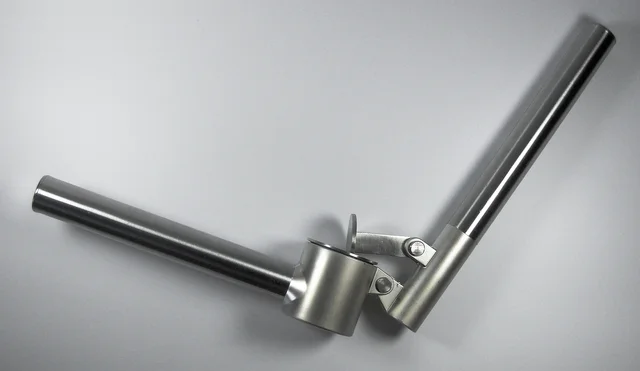
IKEA names KONCIS a stainless-steel garlic press, but the detailed materials also list aluminium and a brushed nickel-plated finish. The page does not map every material to a specific component. Keep that distinction: the title describes the product, while the detailed list prevents treating every part as stainless steel.
Its removable insert gives access for cleaning, yet the maker still specifies hand washing and washing before first use. A removable part is not automatically dishwasher-safe. If your purchase depends on putting the complete tool in the dishwasher, compare a model whose own instructions permit that routine.
The photo shows a historical KONCIS design. It illustrates the named product; neither appearance nor the old photograph verifies the composition of a current supplied unit. Use the linked Indian product specifications for the documented material and care comparison.
Compare materials and care before choosing
| Question | Evidence to request | Keep unresolved when |
|---|---|---|
| What touches the food? | Named material for head, blade or bowl | Only the handle material is given |
| What is the handle made from? | Exact model specification | Photographs are the only evidence |
| Is hot cooking an intended use? | Manufacturer use instructions and stated limits | Listing only says premium or durable |
| Which parts can be washed together? | Model care instructions | Whole-tool and component claims conflict |
| Is dishwasher use supported? | Exact model and part-specific care statement | A similar product has the claim |
| Does the evidence match the selected variant? | Model code, size and manufacturer record | Capacity or generation differs |
Keep the source URL and date beside each answer. A short saved note is easier to compare than a folder of promotional claims with no model identity.
Treat a contradiction as a question
If the title names one plastic and the description names another, do not silently pick either. Save both statements, the model and the selected variant. Ask the manufacturer to identify which material applies to the food-contact part and which applies elsewhere.
The same approach works when the title says steel but the detailed description specifies only a steel blade. The statements may describe different components. They may also be an error. Clarification should identify the relevant part rather than merely repeat that the product is good quality.
If the answer remains vague, keep that model outside your confirmed shortlist. You can compare another sufficiently documented tool without inventing a resolution.
Read care as part of the buying decision
Decide how you normally clean kitchen tools. Then compare that routine with the documented method. For a chopper, check the bowl, blades and mechanism separately. For an electric tool, follow the exact manual for the motor unit and detachable parts.
A stainless steel blade description is not a dishwasher instruction. A washable bowl claim is not permission to immerse every component. Ask for the actual care statement when the listing does not distinguish them.
For spoons and turners, record any stated heat limit with its units and conditions. A general heat-resistant phrase leaves an unanswered question if your intended task needs a specific limit. Do not invent a temperature from another product in the range.
Keep broad claims in perspective
Words such as food grade, toxin free, premium and unbreakable should prompt a request for supporting model documentation. Do not convert them into a guarantee of performance or a health claim.
A home colour, smell or flexibility observation cannot establish every property you need for purchasing. Avoid destructive checks or improvised heat tests. Where a certification is material to your decision, ask which standard, model and verifiable record the claim refers to.
Save a purchasing note you can use
For each candidate, write one sentence about intended use, one about documented materials and one about the care restriction that matters to you. Add unresolved questions underneath. This keeps the comparison focused on suitability instead of a contest between material names.
Use the chopper sizing guide separately when capacity matters. Materials, permitted batch size and cleaning effort need their own answers before a tool earns a place in your kitchen.
Sources
Read how we choose or report a correction.
Disclosure
Some product links are affiliate links. As an Amazon Associate I earn from qualifying purchases. This does not change the price you pay.
We compare published product specifications and instructions. We have not hands-on tested these products. Prices, stock and delivery can change; check the selected model and current terms before buying.