Kitchen Tools and Food Preparation
Which Kitchen Tools Help with Weekly Indian Meal Prep?
The kitchen tools most likely to help your weekly meal preparation are the ones that remove a repeated difficulty in your own routine. Start with the task that slows you down, then compare the complete job: setup, preparation, transfer, washing and putting away. A faster cutting step alone does not prove that an extra gadget saves time.
3 products · Compare before you buy
Product comparison at a glance
| Product | Repeated task it addresses | Documented features | Main purchase consideration |
|---|---|---|---|
OXO Rice & Grains Washing Colander | Rinsing and draining rice, quinoa, buckwheat and barley | Slow-draining design, square holes and extra drainage at pouring spout | No measured time saving or guarantee of retaining every fragment; confirm working batch and care |
IKEA UPPFYLLD 405.219.51 spinner | Rinsing salad and spinning off water | Basket plus serving bowl; 23 cm diameter × 16.5 cm height | Handwash only; documented dimensions do not establish grams of greens per batch or drying performance |
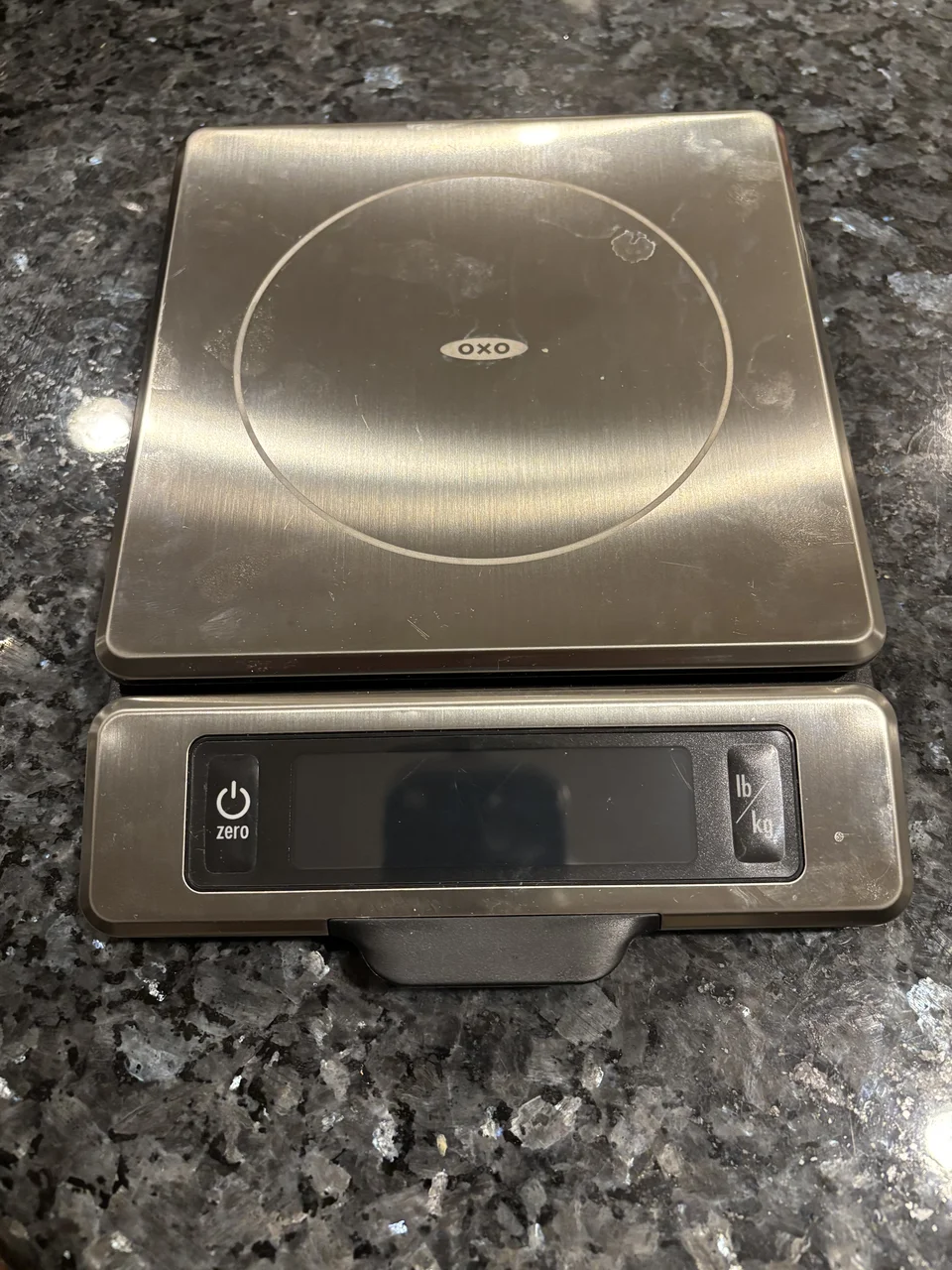
OXO 11 lb stainless-steel food scale | Repeated ingredient weighing in a bowl | Pull-out display, zero function, 1 g / 0.1 oz steps | Minimum load and error bound unverified; allow for bowl load and extended display space |
.jpg)
These three products address different preparation tasks. The comparison uses published specifications; no hands-on speed advantage is claimed. “Weekly” describes planning across the week, not permission to keep every prepared ingredient or dish for seven days. Use appropriate food-specific preparation and storage guidance separately. Our selection method explains the evidence standard.
Read the product choices
Choose the colander for a recurring grain-draining problem, the spinner for repeated salad preparation, or a scale when ingredient weighing is the bottleneck. These products solve different jobs and are not interchangeable alternatives or a mandatory kit. None of the reviewed sources establishes a measured time saving.
Identify one recurring difficulty
Write down the meals you expect to make, including their actual preparation requirements. Onion slices for one dish and finely chopped onion for another are different tasks. A single slicing attachment may not cover both. Similarly, washing a small amount of rice is different from handling a large family batch.
For one ordinary cooking session, note where you spend effort: preparing ingredients, finding utensils, transferring food, waiting for a bowl to be free or cleaning equipment. Pick one problem to address first. If the problem is finding the measuring spoon, a better storage location may be more useful than buying another set.
| Repeated difficulty | Tool function to investigate | A reason to defer purchase |
|---|---|---|
| Awkward grain rinsing and draining | A vessel intended for the grain and batch | Existing bowl and suitable strainer already work comfortably |
| Repeated uniform slices or strips | A slicer with the exact documented cut | Your dishes mostly need different cuts or only small quantities |
| Wet salad leaves before assembly | A spinner sized for the actual greens batch | You rarely prepare leaves or cannot store the assembly |
| Repeated ingredient measurement | Measures or a scale suited to the recipe units | Existing equipment provides the required range and markings |
| Too many transfers between vessels | A suitable preparation bowl arrangement | Buying more bowls would increase clutter without changing the sequence |
The table offers questions to investigate, not a mandatory kit. The relevant choice depends on your meals, available space and current tools.
Measure total task time
Use the same quantity and intended result when comparing a current method with a candidate tool. Record each stage rather than timing only the most impressive part of a demonstration.
| Stage | What to include |
|---|---|
| Setup | Retrieve, assemble and adjust the tool as instructed |
| Preparation | Complete the defined ingredient task |
| Transfer | Move the prepared ingredient into the receiving vessel |
| Cleaning | Disassemble where instructed, wash and arrange for drying |
| Storage | Reassemble or cover as instructed and put parts away |
Here is a hypothetical example, not a measured product result. Your current method takes 2 minutes to set up, 8 to prepare, 1 to transfer and 3 to clean and put away: 14 minutes. A gadget takes 3 minutes to set up, 4 to prepare, 2 to transfer and 6 to clean and store: 15 minutes. The preparation step halves, but the whole task takes a minute longer.
A different batch could change that comparison. It might also produce a cut you prefer, which is a separate benefit worth recording. Keep time, effort, result and storage burden as separate observations instead of collapsing them into an invented overall score.
Check batch capacity before buying bigger
Record the amount you actually prepare, in a defined unit. Ask whether the manufacturer states a working batch rather than just vessel volume. Also check whether multiple smaller loads would fit your routine better than a large item that is awkward to lift, wash or store.
For grain preparation, OXO describes its Rice & Grains Washing Colander as a slow-draining design with square holes and additional drainage at the pouring spout. It names rice, quinoa, buckwheat and barley. Those documented features make it a candidate to investigate when draining grains is your specific difficulty; they do not establish a time saving or retention of every small fragment. Source: OXO product page
For size and capacity questions, use the rice-washing bowl guide. Do not convert a bowl's advertised litres directly into the number of people it serves.
Weighing: check bowl access as well as capacity
The OXO 11 lb scale adds a pull-out display and zero function to this shortlist. Its published display steps are 1 g and 0.1 oz. Those steps do not establish a minimum useful load or a measured error bound. Check the smallest quantity your recipes require instead of treating the capacity headline as proof of suitability for every ingredient.
This layout is worth considering when a broad bowl would hide a fixed display. Check the footprint with the display extended and the full bowl-and-food load against the supplied instructions. Make sure the receiving vessel sits correctly; a movable display does not establish universal bowl compatibility.
For repeated additions, follow the exact zero/tare instructions and keep the accumulated load in mind. Zeroing a display does not remove the physical weight already on the scale. If the recipe requires fractions smaller than the documented useful range, retain a suitable measure rather than estimating from the final digit.
The photograph shows an OXO scale design. Its model number is not visible, and it does not depict the colander or spinner. It illustrates the display arrangement without proving the current Indian package or measurement performance.
Count cleaning and storage as part of the tool
IKEA's UPPFYLLD 405.219.51 spinner is listed at 23 cm diameter and 16.5 cm height, with hand washing specified. Its basket is used for rinsing salad before spinning, and the bowl can be used for serving. This illustrates both a possible shared function and a real cleaning requirement. It does not establish how many grams of your greens fit comfortably. Source: IKEA India
Compare those kinds of dimensions with your sink, drying rack and cupboard opening. An item that is stored behind several pans adds retrieval work even if its cooking function suits you. The salad-spinner guide separates bowl capacity, basket capacity and working batch.
For any tool, list the parts you must account for after use. Check which separate for cleaning and which are not intended to be dismantled. A material name or a product photograph cannot establish dishwasher permission.
Use specialised tools for specific tasks
A mandoline may be relevant to repeated documented slice shapes, but the supplied holder, support arrangement and exact manual remain essential purchase checks. Do not treat it as a universal substitute for every cutting task. See the mandoline selection checklist before considering one.
If repeated weighing is the issue, compare the amount being measured, the bowl used and the scale's documented range. A larger maximum capacity does not by itself establish useful performance at small quantities. The digital-scale guide covers those checks.
If two people prepare food together, note which shared tool is genuinely needed at the same time. A second suitable bowl or utensil may resolve a queue; an elaborate new appliance may not. Base the decision on an observed overlap rather than purchasing everything in pairs.
Keep a short trial record
After changing the arrangement or adding a tool, record whether it solved the named problem over ordinary cooking sessions. Note any new work it introduced. You do not need a formal experiment to notice that a lid is hard to store or that transferring ingredients takes longer than expected; simply label these as your own observations.
Keep the next purchase tied to a clear trigger: a recurring batch no longer fits, a required cut is unavailable, or two tasks repeatedly compete for one tool. A general meal-prep collection is not evidence that every included item helps your kitchen.
If you are still building the first inventory, begin with the newlywed kitchen-tool checklist. For an established kitchen, solve one repeated difficulty at a time and retain the exact care instructions for any new item. Send documented errors through our corrections policy.
Sources
Read how we choose or report a correction.
Disclosure
Some product links are affiliate links. As an Amazon Associate I earn from qualifying purchases. This does not change the price you pay.
We compare published product specifications and instructions. We have not hands-on tested these products. Prices, stock and delivery can change; check the selected model and current terms before buying.