Kitchen Tools and Food Preparation
Wooden vs Marble Chakla Boards for Roti Making
Choose a chakla by checking the rolling area, the way its base meets your worktop, and the effort of moving and cleaning it. Wood and marble are useful starting categories, but a material name cannot establish that a particular board will stay still, feel comfortable or improve your rotis.
2 products · Compare before you buy
Product comparison at a glance
| Product example | Material and supplied configuration | Documented care | Main purchase consideration |
|---|---|---|---|
Ellementry In Teak Large WDKEA0146 | Wooden chakla, belan and stand | Mild-detergent rinsing; avoid abrasives and deep soaking | Listed net weight covers the set, not board-only mass; stability and usable rolling area untested |
Nyra white-marble chakla with wooden belan | Marble board and wooden rolling pin | Soft damp cloth, mild soap and water; no acidic/abrasive cleaners or dishwasher; dry components | Occasional food-safe oil instruction applies to wooden pin, not marble; board fit and mass need confirmation |
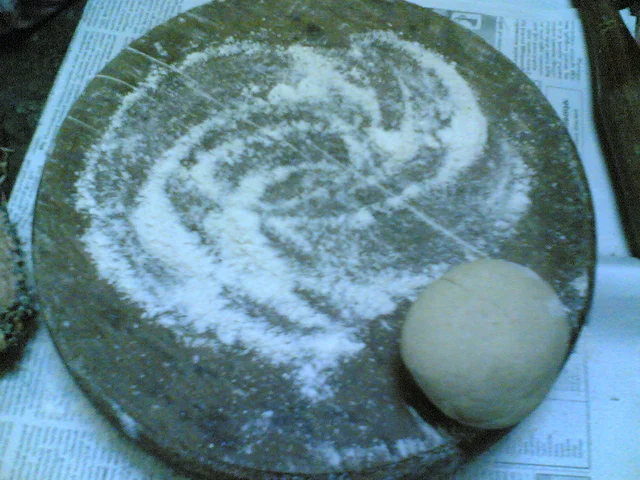

This research-based comparison provides a purchase worksheet. We have not tested boards for slipping, dough release, temperature or hygiene. The two sets offer different materials and care requirements. Choose by the exact board and your workspace rather than assuming either material guarantees better results.
Which arrangement suits your routine?
Record what you want to change. Does the board move during rolling? Is the usable area cramped for your usual paratha? Is it awkward to lift into the sink? Does it take up the space needed for other preparation?
Keep these observations separate. More working area might help with a space problem, while adding mass would not necessarily address it. If your existing board works comfortably and is in suitable condition, changing material alone is not an established reason to replace it.
Compare the same task on your shortlist. Do not use a small roti board and a large pastry slab as evidence that one material is universally more convenient.
Measure the usable area and the surrounding space
Ask for the diameter of the flat surface used for rolling, overall diameter, height and base arrangement. A raised edge or decorative border should not silently count as usable rolling space. Check photographs for questions to ask, rather than measuring from the photograph.
Measure where you will work. Allow room for the belan and your hands, along with the flour container and plate you normally keep nearby. Check the storage location and washing space separately. A board that fits the worktop may still be awkward to carry or store.
The rolling pin is a separate choice. Our belan comparison worksheet explains working span, overall length and grip checks. A marble board can be paired with a wooden pin; the board material need not dictate the pin material.
Examine stability and handling separately
A heavy-board description is not a slip test. Ask whether the underside is flat, whether it has feet or pads, and whether the maker specifies how it should be placed. If you can inspect a sample, check for rocking on an appropriate flat surface and follow its placement instructions.
For an online purchase, mark stability as unverified when the available information does not establish it. Do not treat a statement about weight as proof of stability on your own counter.
Request board-only mass. Ellementry's In Teak set lists a chakla, belan and stand with separate dimensions, followed by one net-weight figure. That does not establish the board's individual mass. Its care section calls for mild-detergent rinsing and avoiding abrasives and deep soaking. These are instructions for that product, not every wooden chakla. Ellementry product details and care.
Read care for each component
Nyra's marble-board and wooden-belan set gives marble care using a soft damp cloth and mild soap and water, excluding acidic or abrasive cleaners. It calls for drying the components and separately describes occasional food-safe oil for the wooden belan. The page specifies no dishwasher use. The oil instruction belongs to the wooden pin, not the marble board. Nyra component care.
For either material, obtain the exact item's food-use, finish and care information. Avoid inventing an oiling schedule or cleaning recipe where the maker has not specified one. Use the component-material checklist when the working surface, finish or feet are unclear.
Complete a board-to-storage worksheet
| Question | Wooden option | Marble option |
|---|---|---|
| What problem should it solve? | Describe your task | Describe the same task |
| How much flat area is usable? | Confirm dimensions | Confirm dimensions |
| What supports the board? | Record base or feet | Record base or feet |
| Can you move it comfortably? | Verify board-only mass; mark comfort unknown until handled | Verify board-only mass; mark comfort unknown until handled |
| What must be cleaned separately? | Board, pin, stand or pads | Board, pin, stand or pads |
| Where will it dry and be stored? | Check your actual space | Check your actual space |
| What remains uncertain? | List missing evidence | List missing evidence |
Consider wood when the confirmed design and care fit your routine. Consider marble on the same basis. Give essential fit and handling requirements priority over appearance, and leave unresolved requirements visible before choosing.
This evidence does not establish a material-wide winner for hygiene, dough sticking, roti roundness, lifespan or comfort. The practical choice is a documented board you can use, move, clean and store for your own meal routine.
Sources
Read how we choose or report a correction.
Disclosure
Some product links are affiliate links. As an Amazon Associate I earn from qualifying purchases. This does not change the price you pay.
We compare published product specifications and instructions. We have not hands-on tested these products. Prices, stock and delivery can change; check the selected model and current terms before buying.