Kitchen Tools and Food Preparation
How to Choose a Rolling Pin for Rotis, Puris and Parathas
Choose a rolling pin by comparing it with the breads you make and the space in which you roll them. Start with grip, working length and the task you want to improve. A product labelled “roti belan” does not establish that its dimensions will suit your hands or your chakla.
3 products · Compare before you buy
Product comparison at a glance
| Product | Documented geometry | Distinct feature | Main limitation |
|---|---|---|---|
Joseph Joseph PrecisionPin 40113 | Overall H6.4 × W42 × D6.4 cm | Five removable guide pairs: approximately 2, 4, 6, 8 and 10 mm | Usable rolling span and board clearance unresolved |
IKEA MAGASIN 201.919.42 | Overall length 43 cm; diameter 6 cm | Handled birch roller with mixed-material construction | Total length does not establish barrel width |
HAZEL VR10710 | Maker title says 38 cm length | Conventional wooden belan | Conflicting diameter and warranty fields; confirm usable span |
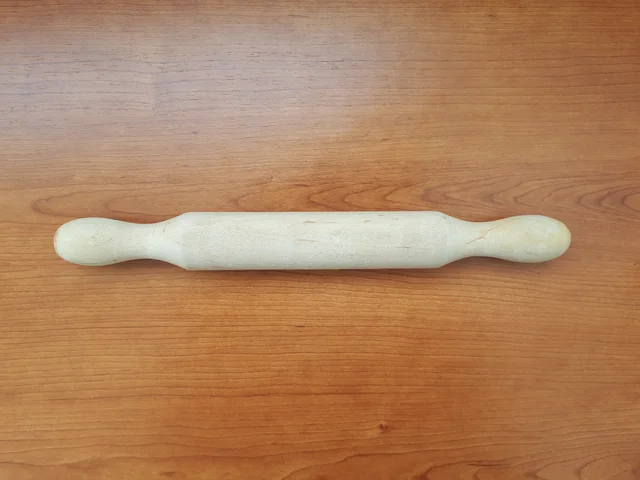

This is a selection worksheet, not a tested product ranking. It does not prescribe one ideal size or promise round rotis, puffed puris or intact stuffed parathas.
Read the three product examples
The rolling-pin comparison documents three arrangements: PrecisionPin with removable thickness guides, the handled MAGASIN roller and HAZEL’s conventional belan. Their overall dimensions do not establish equal usable rolling spans. HAZEL’s conflicting diameter and warranty fields remain unresolved; no guide-ring setting guarantees a recipe result.
Write down the problem before changing the tool
If you already own a belan, use your normal cooking routine as a baseline. Record what feels awkward: reaching across a wide dough disc, controlling small movements, lifting the pin repeatedly, cleaning it, or finding storage for it. Separate a tool problem from an outcome you have not yet diagnosed.
Keep a short record for each bread you actually make. For rotis, note whether the grip and rolling span feel comfortable through your usual batch. For puris, note how the pin feels when working with your smaller dough portions. For parathas, distinguish plain, layered and stuffed preparations rather than treating them as one task.
These observations describe your routine. They do not prove that changing material or adding weight will resolve uneven thickness, sticking or tearing. If your existing pin works comfortably for all three tasks, a second specialist pin may add storage and cleaning work without solving a clear problem.
Compare working length with total length
Ask for the length of the surface that actually contacts dough, as well as the overall length. A measurement including separate handles is different from the usable roller span. On a tapered pin, the diameter can vary along its length; ask where the quoted diameter was measured.
Measure your chakla or the usable area of your worktop. Consider the space around it for your hands and the pin's movement. Check the drawer or holder where the whole pin will be stored. Do not use a photograph to infer whether the pin is longer than your existing one.
Create a size note for the pin you already use: overall length, usable span and diameter at the centre. Mark any uncertain measurement as approximate. This gives you a concrete reference when asking about a proposed replacement.
Check how you will hold it
A one-piece pin is held directly on its body; a handled pin provides separate grip points. Look at where your hands would sit and whether that position suits your available workspace. Neither arrangement establishes comfort from the listing alone.
If an in-store sample is available, check the grip and movement before choosing. Without handling it, treat comfort as an unresolved point. A dimension or weight can narrow a shortlist, but cannot show how the tool feels through a full batch.
Ask for the bare tool's weight if a listing gives only shipping or packaged weight. Compare it with your existing pin rather than assuming the heavier or lighter option is automatically better. Keep the evidence limited to what you can establish before purchase.
Read care instructions for the whole tool
Check the roller, handles and any moving parts separately. IKEA India's MAGASIN page identifies different materials for the roller, rod and handle and gives a damp-cloth care instruction. Use these exact-model instructions when assessing whether its maintenance suits your routine; do not transfer them to every wooden pin. IKEA MAGASIN materials and care.
Before buying, find the exact product's first-use and regular-cleaning instructions. Check whether you can follow them in your kitchen. Do not infer dishwasher suitability, soaking permission or oiling requirements from a material name alone.
Use the kitchen-tool material checklist when a listing leaves component materials or care claims unclear. Keep any claim about food-contact suitability tied to documentation for the actual product.
Make a comparison note
| Question | Your current pin | Proposed replacement |
|---|---|---|
| Which task is awkward? | Record the actual problem | Explain how the design might help |
| What is the rolling span? | Measure the usable surface | Obtain a confirmed measurement |
| How much space is needed? | Check hands, board and storage | Compare overall dimensions |
| How does it feel to hold? | Record your experience | Handle a sample or mark unknown |
| What does it weigh? | Use a reliable measurement | Confirm bare-tool weight |
| What care is required? | Check existing instructions | Read exact-model instructions |
For an online enquiry, ask for the usable rolling length, total length, centre diameter, bare weight and care instructions for the exact model. Add a question about handle movement if that is relevant to its design.
Choose a replacement when you can connect its confirmed features to a real task or fit problem. Leave comfort and performance unproven until you have used it; a purchasing worksheet helps you ask better questions, but cannot substitute for that experience.
Sources
Read how we choose or report a correction.
Disclosure
Some product links are affiliate links. As an Amazon Associate I earn from qualifying purchases. This does not change the price you pay.
We compare published product specifications and instructions. We have not hands-on tested these products. Prices, stock and delivery can change; check the selected model and current terms before buying.