Kitchen Tools and Food Preparation
How to Read Kitchen Scale Accuracy and Capacity Specifications
A kitchen scale's largest number tells you little about its smallest useful measurement. Read maximum capacity, minimum load, displayed increment and accuracy evidence separately. Then check how the bowl, tare function and operating conditions affect your actual recipe.
3 products · Compare before you buy
Product comparison at a glance
| Product | Mechanism and documented range | Bowl handling and care | Main purchase consideration |
|---|---|---|---|
HealthSense Chef-Mate KS33 | Digital; support specifies 3 g minimum and 5,000 g maximum | Tare instructions require bowl of at least 200 g; not waterproof; no hot items | Overload guidance says below 5 kg; 2 g fresh load unsupported; no measured error bound |
Salter Timeless SA00562 series | Battery-free mechanical dial; up to 5 kg in 25 g divisions | Add and Weigh listed; removable bowl dishwasher-safe | Dial divisions are not an accuracy guarantee; exact colour variant and India offer unverified |
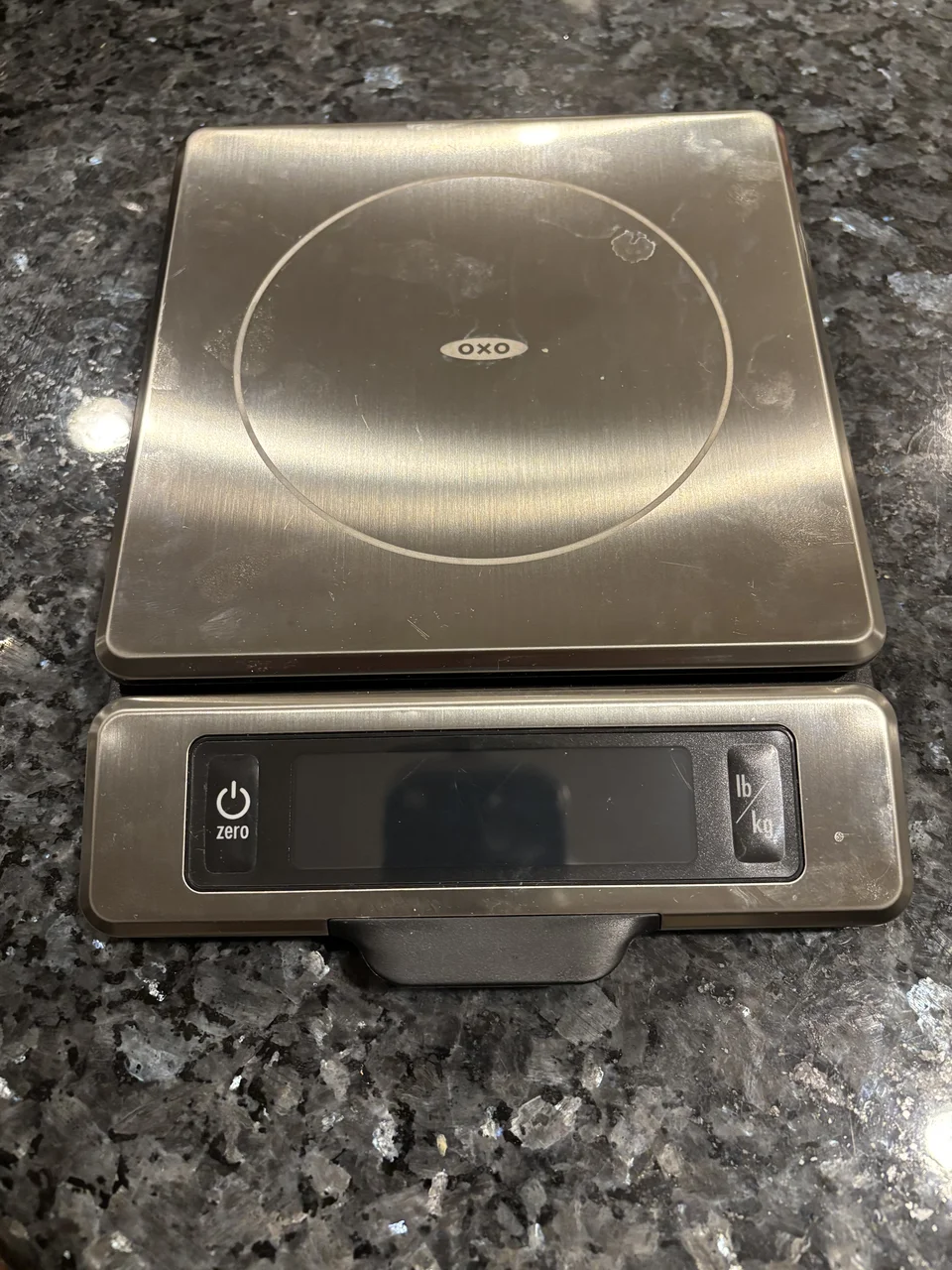
OXO 11 lb stainless-steel food scale | Digital; 1 g / 0.1 oz steps | Pull-out display; zero function | Minimum load, measured error and Indian variant unverified |
.jpg)
This guide explains what to ask for. It does not calibrate a device, certify a kitchen scale or provide a laboratory measurement procedure. Examples labelled hypothetical are arithmetic illustrations, not test results for a product.
OXO: a display specification is only one field
Use the OXO entry to practise separating a documented indication from a missing performance specification. Record its stated display steps in the display field. Leave a numeric error bound and minimum useful load unresolved where the retrieved product details do not establish them.
Do not fill those gaps from the photograph. A visible zero button, unit control or separate display housing helps identify design questions, but cannot demonstrate response to a small addition. Likewise, an exact model number is not visible in this image. Match the supplied version and applicable instructions before relying on a specification for purchase.
Read the product choices
The table compares digital layouts alongside the Salter Timeless mechanical example documented in our digital-versus-mechanical comparison. Salter's 25 g dial divisions describe reading intervals, not a measured error tolerance. These examples have not been tested for accuracy here, and their India offers are not verified.
Maximum capacity: the upper constraint
Capacity describes an upper loading specification. Read the manufacturer's complete instructions to determine what counts toward it and how the container is treated. Do not assume that resetting the display removes physical load from the platform.
For a hypothetical device with a permitted total load of 5 kg, a 1 kg bowl would leave at most 4 kg before reaching that total. This subtraction applies only if the maker defines capacity on that basis. It is not advice to operate at the limit, and other restrictions may reduce the usable amount.
Record your largest ordinary combined bowl-and-ingredient load. If it approaches or exceeds the documented limit, choose suitable equipment rather than relying on repeated taring to create extra capacity.
Minimum load: the lower constraint
Check the lowest load for which the maker establishes intended use or performance. The ability to display zero does not establish useful measurement of every small addition above zero. Ask whether the specification concerns a fresh load, an incremental addition after tare or another defined condition.
The HealthSense KS33 support page lists a 3 g minimum and 5000 g maximum. That is a model-specific example, not a rule for all kitchen scales. Its overload answer also says to keep the load below 5 kg, so boundary use should not be inferred from the headline maximum alone.
If your recipe needs an amount below a candidate's documented range, the larger capacity number does not resolve the problem. Seek an appropriate measuring method rather than estimating an unverified tiny reading.
Display increments and resolution
A display may change in steps such as whole grams or tenths of a gram. That describes the presented indication, not a complete accuracy guarantee. NIST's discussion of resolution warns against inferring instrument resolution from displayed digits alone.
Consider a hypothetical display stepping from 10 g to 11 g. It cannot show 10.4 g as a distinct displayed value in that mode. This observation about formatting does not establish the device's error bound or whether it responds reliably to a particular small addition.
Do not buy extra decimal places as a substitute for documented performance. Compare the actual specification and its conditions with the measurement the recipe requires.
Accuracy and repeatability answer different questions
NIST's accuracy discussion ties accuracy to agreement with a reference value. A convincing claim therefore needs more than a stable-looking display. Ask what error is specified, over what range and under which conditions.
Repeatedly showing the same value is useful information, but it does not by itself prove closeness to the correct value. A stable wrong reading remains possible. Likewise, agreement with another unverified kitchen scale does not establish a traceable reference.
This buying guide does not recommend coins, an arbitrary stone or a nominal grocery-pack weight as calibration standards. Follow the maker's appropriate service or verification route if the device appears faulty. Do not treat a home comparison as a calibration certificate.
Tare is a function, not extra physical capacity
Read the exact tare procedure, including any minimum container or load condition. Check whether the unit remains the same after taring and what happens if the scale switches off between ingredients. Do not assume that all devices preserve the previous measurement state.
Record the bowl you intend to use, its footprint and whether it obscures the controls or display. A scale can have adequate nominal capacity while being inconvenient with your particular vessel. The platform's dimensions and supported placement still need to suit the full arrangement.
Unit modes need definitions
Grams, ounces, millilitres and fluid ounces do not all describe the same quantity. If a device offers a volume mode, identify the substance and assumptions specified for it. Do not use an unexplained conversion mode as a universal ingredient-density calculator.
For an imported variant, confirm that the unit labels, instructions and controls match the exact supplied model. A similar-looking product page may describe another revision. Keep the model code and manual together in your comparison notes.
A specification worksheet
Worked example: separate a stated feature from an unanswered question
The KS33 support page illustrates why reading beyond the capacity headline matters. Its tare procedure specifies a bowl weighing at least 200 g; its volume modes are labelled for water. It also calls for a hard, level surface, says the scale is not waterproof and advises against placing hot items on it. These are instructions for that model, not universal rules for every scale.
The support answer describes readings as accurate but supplies no numeric error tolerance or test conditions. Record accuracy as not quantified in this source. Do not turn that answer, or the 3 g minimum, into a claim of ±1 g accuracy. If your recipe's smallest addition is 2 g, the documented 3 g minimum leaves that use unsupported. A bowl that meets the tare instruction does not establish otherwise.
Your candidate's record
| Field | Evidence to record |
|---|---|
| Maximum load | Definition, container treatment and overload conditions |
| Minimum useful load | Stated range and applicable measuring mode |
| Display | Unit and indicated increment |
| Accuracy | Error specification and test conditions, if supplied |
| Tare | Procedure, restrictions and restart behaviour |
| Geometry | Platform, controls, display and bowl fit |
| Operation | Surface, power, environmental and care requirements |
Leave missing values blank. Marketing terms such as high precision do not supply a numeric tolerance. A product without sufficient evidence for your smallest critical quantity should remain unresolved rather than receiving a guessed rating.
Read cups versus scales to choose a method, and how we choose for the evidence standard. Use the corrections channel for changed specifications.
Sources
Read how we choose or report a correction.
Disclosure
Some product links are affiliate links. As an Amazon Associate I earn from qualifying purchases. This does not change the price you pay.
We compare published product specifications and instructions. We have not hands-on tested these products. Prices, stock and delivery can change; check the selected model and current terms before buying.