Kitchen Tools and Food Preparation
Silicone Pastry Brushes for Indian Kitchens: Head Fit, Coating and Care
Choose a silicone pastry brush for a specific coating task: the liquid you apply, the area you cover and the conditions in which the brush touches food or cookware. Applying a wash to dough before baking is a different requirement from brushing a hot pan. The word silicone does not establish permission for every use.
3 products · Compare before you buy
Product comparison at a glance
| Product | Construction and applications | Size and care | Main purchase consideration |
|---|---|---|---|
IKEA BAKGLAD 40485552 | Polypropylene shaft and silicone-rubber bristles | 26 cm length; dishwasher care | Working head width and numeric heat limit missing |
OXO Silicone Pastry Brush 1071062 | Centre-hole bristles, tapered outer bristles and angled head; egg wash, syrup and melted butter applications | Dishwasher care; published dimension axes unclear | Numeric heat limit and Indian package correspondence unresolved |
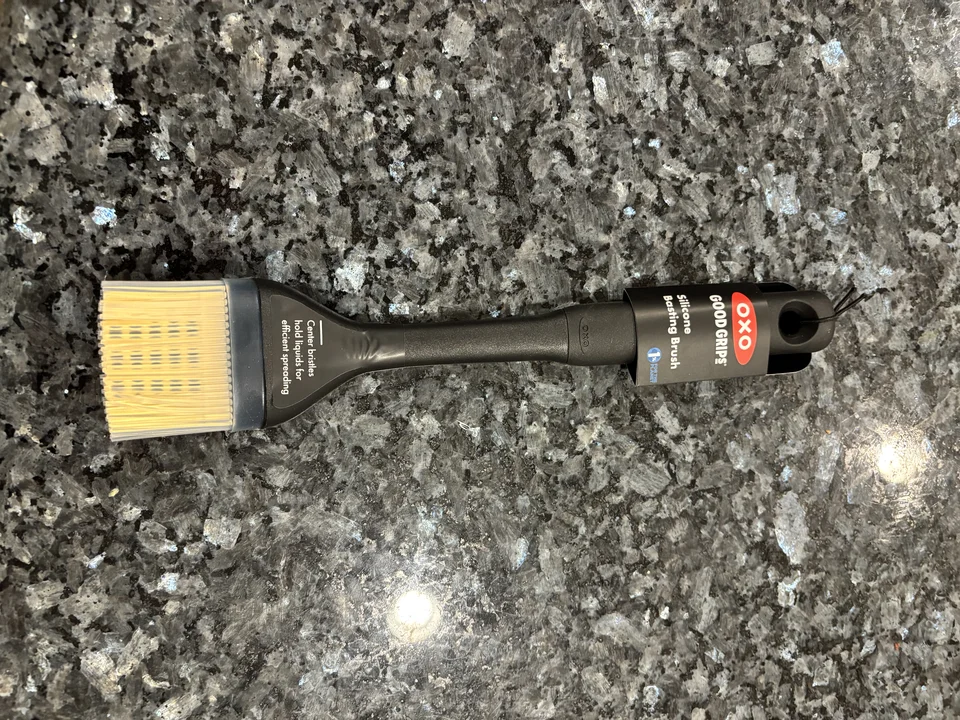
OXO Silicone Basting Brush 1071061 | Layered silicone bristles with centre gaps and tapered outer bristles | Listed 10.7 × 2 × 1 inches; dishwasher care | Separate model from 1071062; dimensions do not identify working bristle width; numeric heat limit unresolved |
.jpg)
Compare three documented brush designs by intended task, vessel fit and care. Liquid pickup, spreading and cleaning performance have not been independently tested.
Start with the surface you need to cover
Record one regular task, such as applying a wash to buns, brushing melted butter onto prepared food or spreading a recipe's glaze. Note whether the area is broad and flat, narrow at an edge or delicate enough that pressure matters. Follow the recipe and the tool's intended use rather than assuming every liquid needs the same brush movement.
Then record the dipping vessel. A head that suits a broad baking surface still needs to enter the bowl or cup holding the liquid. Overall brush length tells you little about that fit. Ask for the working head width and bristle length when the opening is narrow.
Keep quantity separate from the number of strokes. Without a measured transfer test, we cannot promise that one head carries more butter, uses less glaze or coats a tray faster. A feature intended to retain liquid is a design choice to investigate, not a measured result.
Compare the three brush designs
IKEA India's BAKGLAD page identifies the shaft and bristles separately. This matters because the complete tool is not a single piece of silicone with one assumed heat limit. Its 4 cm width appears in packaging data, so we do not present that as a verified bristle-head width.
Investigate it when the documented care suits your routine and the missing geometry and use limits can be confirmed. Choose another documented tool if your main task depends on a heat exposure that this page does not specify.
OXO's page identifies SKU 1071062 and describes centre-hole bristles, tapered outer bristles and an angled head. It names egg washes, syrups and melted butter as applications. The angle is intended to keep bristles above a counter when resting, but we have not tested that behaviour on different surfaces.
Consider this design if those applications match your task and you want to investigate that bristle arrangement. The accessible US page supplies no numeric heat limit, and its dimensions do not clearly identify working head width. Exact Indian variant and package correspondence also remain unresolved.
Regional listings also need checking against the supplied instructions. The OXO Thailand listing names model 1071062 but gives different dimensions and a heat claim of 120 degrees without identifying the scale in that statement. It does not specify the component or duration to which that limit applies. This is insufficient evidence for a temperature recommendation for an Indian purchase; obtain the exact package instructions before choosing it for hot-surface use.
OXO basting brush: keep the two model numbers separate
The Silicone Basting Brush page identifies SKU 1071061. It describes layered bristles with liquid-retaining gaps and supplies the dimensions and dishwasher permission shown in the table. It is a separate item from the 1071062 pastry brush, so do not combine their specifications or infer identical head geometry.
Consider the basting design when that application matches the food you prepare. Check that the working head enters your liquid vessel and reaches the intended surface; the published three-number size does not label the actual bristle span. The retrieved US details do not give a numeric heat limit, so they do not establish hot-pan contact or permission to leave the brush in an oven.
The photograph shows the basting product’s labelled packaging. It helps distinguish the design from the pastry option, but does not verify the current Indian package or a supplied unit’s exact SKU. Match the model and instructions when choosing an offer.
Read heat claims as instructions, not adjectives
Before selecting a brush for hot food or cookware, obtain the actual permitted temperature and contact conditions for the exact model. Find out whether the statement applies to the bristles, the head or the complete tool. The shaft or a join may use another material.
The reviewed product details do not supply enough detail to recommend leaving its brush in an oven or using it directly against a hot tawa. A heat-resistant label does not establish those permissions. A long handle also does not establish a cool grip or protection from every nearby heat source.
For a task performed away from heat, do not make an unsupported temperature claim the deciding feature. Compare the head and vessel fit first. If direct hot-surface contact is essential, treat explicit instructions as a requirement rather than filling in a familiar silicone temperature from another product.
Check access around the bristles
Look for the maker's cleaning method, including whether the head is intended to detach. A visible seam does not prove that pulling the head off is permitted. If components separate, keep their individual care requirements with the exact product record.
Dishwasher permission for these examples is useful, but it does not establish equal cleaning time or freedom from retained residue. Follow the supplied instructions and inspect the brush as part of normal care. Do not convert marketing statements about odour resistance or shedding into guarantees about long-term use.
A multipack may help organise different tasks, but colour alone does not establish material, temperature permission or a cleaning process. Check each model and size in the pack. Buying extra brushes only helps when you have a clear use and storage place for them.
Use this purchase checklist
| Your requirement | Evidence to collect |
|---|---|
| Reach the liquid in its vessel | Working head width, bristle length and usable handle reach |
| Cover the intended area | Head geometry and maker-described application |
| Contact hot food or cookware | Exact temperature, component scope and permitted contact conditions |
| Wash as part of your normal routine | Whole-tool or component-specific care |
| Store between uses | Full dimensions and any required cover or drying arrangement |
| Buy the documented configuration | Model number, variant and supplied parts |
For example, a narrow cup can rule out a brush whose head will not enter it even when the handle length is convenient. A recipe requiring a delicate wash can justify investigating tapered bristles, but it does not prove that every brush with that feature spreads a thinner coating. Keep each inclusion tied to what is documented.
Choose the brush for the actual task
Shortlist a model when its head fits your liquid vessel, its intended application matches your preparation and its care is workable. If the task involves heat, resolve the exact limits before making it a recommendation. Choose another tool when an essential requirement remains unsupported.
Our methodology explains how published specifications support these comparisons. Use the corrections channel for changed specifications or supplied instructions.
For component declarations, see how to check kitchen-tool materials.
Sources
Read how we choose or report a correction.
Disclosure
Some product links are affiliate links. As an Amazon Associate I earn from qualifying purchases. This does not change the price you pay.
We compare published product specifications and instructions. We have not hands-on tested these products. Prices, stock and delivery can change; check the selected model and current terms before buying.