Kitchen Tools and Food Preparation
Potato Mashers for Pav Bhaji and Aloo Filling: Head and Vessel Fit
Choose a potato masher by the vessel in which you prepare pav bhaji or aloo filling. The head must fit where the food sits, the handle needs usable clearance above the rim, and the contact material must be permitted by the vessel's instructions. A broad head is not useful if it cannot reach the lower part of the pan.
3 products · Compare before you buy
Product comparison at a glance
| Product | Working design | Size and care | Main purchase consideration |
|---|---|---|---|
IKEA KONCIS 90225953 | Stainless steel with straight handle | 39 cm product length; dishwasher care | Package length differs; head dimensions missing; requires cookware that permits steel |
OXO Smooth Potato Masher 34581 | Fine-grid steel plate and broad horizontal handle | Dishwasher care; 6 × 4 × 3 inches with axes unclear | Head size and India variant unverified; no tested effort advantage |
OXO Nylon Potato Masher 77891 | Nylon head; manufacturer permits non-stick use | Dishwasher care; US page states 450°F heat resistance | Head geometry and permitted contact duration unresolved; follow exact supplied instructions |
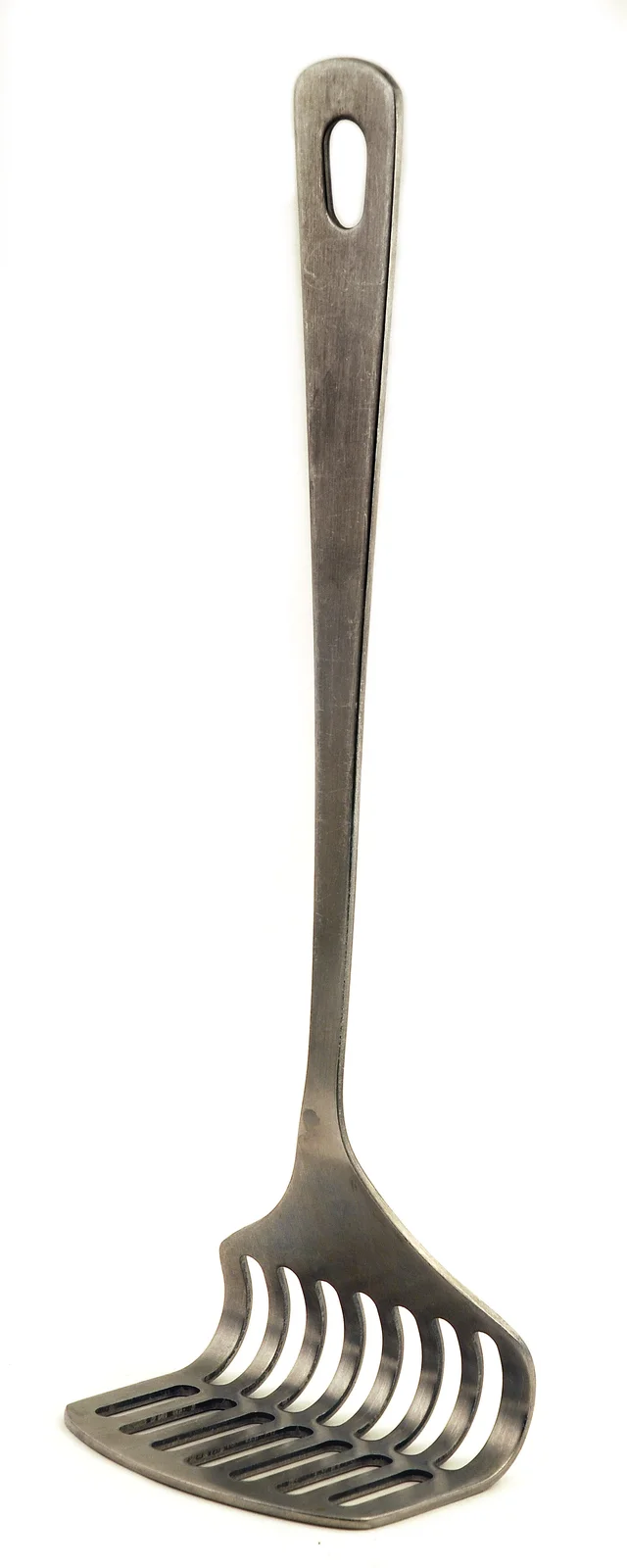

Compare KONCIS for its long straight handle, OXO Smooth for its horizontal grip, and OXO Nylon where your cookware permits nylon contact. The right choice depends on head fit and grip clearance; texture and operating effort have not been independently tested.
Record the preparation you actually make
Start with one usual batch: the cooked ingredients, the vessel and the texture your recipe asks for. Keep pav bhaji and a potato filling on separate lines if you use different vessels or want different results. A masher name does not establish how finely every mixture will finish.
Record the quantity without inventing a household-size rating. A manufacturer's reference to large amounts is not a numerical working limit. If a tool lists no batch capacity, do not assume that its overall length supplies one.
Also decide whether mashing happens in a separate bowl or in cookware. That choice changes both the space and the surface-contact questions. Do not choose a metal head for cookware whose maker excludes metal utensils, even when the tool is advertised for the same dish.
Compare the part that reaches the food
| Measurement | Why it matters |
|---|---|
| Head width and length, or diameter | Whether the head enters the opening and fits the working area |
| Head profile | How its edges relate to the vessel's lower curve |
| Height from head to usable grip | Whether the intended grip clears the rim |
| Handle width and orientation | Whether your normal grip has room beside the vessel |
| Overall stored size | Whether the complete tool fits its storage place |
| Openings and supporting arms | Access for cleaning under the supplied instructions |
Measure your empty, cool vessel. Note its opening, depth and lower internal width; a flared kadai can be much narrower where a small batch sits. Compare those measurements with the tool's actual head dimensions. Packaging width and overall tool length cannot substitute for the missing head size.
You can sketch the proposed head outline on paper once its dimensions are documented. This checks geometry without turning a shopping decision into an improvised hot-pan test. A paper outline cannot establish stability, grip comfort or the effort required to mash.
Long straight-handle example: IKEA KONCIS
IKEA India's KONCIS 90225953 page specifies stainless steel, a straight handle and 39 cm product length. It permits dishwasher cleaning and asks users to wash the tool before first use.
Consider this longer design when its working head and grip clearance suit your vessel. It is not proof that the grip clears every deep pot: the page does not establish the height from the working head to the usable grip or provide a measured head outline.
There is also a sizing question to resolve. The packaging section gives 37 cm length, which differs from the 39 cm product length. We have retained the labels instead of silently choosing a convenient number for storage. The packaged weight is likewise excluded from handling comparisons.
Choose another documented configuration if your vessel excludes steel contact or the unresolved head shape is essential to your fit decision. The brand's description of intended foods does not demonstrate a particular pav bhaji texture in your pan.
Horizontal-handle example: OXO Smooth Potato Masher
OXO's Smooth Potato Masher page identifies SKU 34581. It describes a fine-grid steel plate, a broad soft horizontal handle and dishwasher permission. Its 6 × 4 × 3 inch dimensions do not clearly label the axes or isolate the head measurements.
The horizontal grip is a meaningful design difference to assess against your vessel and storage. It is not evidence of a measured reduction in hand pressure, and the product's name does not prove a lump-free result. Those outcomes would need a defined comparison using comparable food and preparation.
Investigate this arrangement if the handle orientation suits the way you intend to work and the missing dimensions can be confirmed. Look elsewhere if you need a longer grip reach or cookware-compatible material that this documentation does not establish. The US page alone does not confirm the precise variant available in India.
Nylon-head example: OXO Nylon Potato Masher
OXO's Nylon Potato Masher page identifies SKU 77891 and permits non-stick cookware use and dishwasher cleaning. This makes it a candidate to investigate when your pan's instructions permit nylon but exclude steel. Confirm both sets of instructions for the actual tool and pan.
The current US page gives a 450°F heat-resistance claim and overall dimensions of 11.9 × 4.8 × 3 inches. It does not isolate the head size or establish a duration for contact at the stated temperature. Do not interpret the number as permission to leave the tool resting on a hot cooking surface. Obtain the supplied Indian unit's instructions before relying on a heat limit.
This design fills a material-choice gap in the two steel examples. It does not establish better mashing performance or suitability for every coating. Investigate it for permitted nylon contact; look elsewhere if verified head geometry or a different permitted material is essential.
Do not score a head from its photograph
Plate openings, slots and bent-wire heads look different, but appearance alone cannot quantify the final texture or effort. Even two products described as fine-grid can have different hole dimensions, thickness and geometry. The reviewed sources do not supply a comparable performance test.
If texture is the deciding issue, ask what outcome is actually demonstrated and under which conditions. Keep the recipe's preparation and target result explicit. Do not assume a new tool compensates for a different ingredient preparation or produces identical results across a mixed vegetable batch.
This guide also does not extend mashing permission to pressing food on a hot tawa. A shopping article's suggestion of another use is not the exact tool's operating instruction or the cookware maker's contact permission.
Include cleanup in the shortlist
Look at both sides of the mashing head and the spaces around its supporting arms. Confirm how the complete tool should be washed and whether any components detach. Do not invent disassembly merely because a joint is visible.
Dishwasher permission is documented for the three examples, but this is not a comparative cleaning-time result. Follow the supplied instructions for the exact unit and any restrictions on placement or detergents. A material name alone does not supply those details.
For storage, account for the full handle and head arrangement. A horizontal grip may require a different drawer position from a straight handle. Check the actual compartment and retrieval route before treating one tool as compact.
Make the final choice by fit
Shortlist a candidate only when its intended food, permitted contact surface and working geometry match your preparation. Compare care and storage next. Leave claims about superior texture, speed or comfort unscored unless supported by an appropriate test.
Our methodology explains the research standard. Use the corrections channel for clarified dimensions or updated instructions.
For component claims, read kitchen-tool materials.
Sources
Read how we choose or report a correction.
Disclosure
Some product links are affiliate links. As an Amazon Associate I earn from qualifying purchases. This does not change the price you pay.
We compare published product specifications and instructions. We have not hands-on tested these products. Prices, stock and delivery can change; check the selected model and current terms before buying.