Kitchen Tools and Food Preparation
Oil Dispensers for Indian Cooking: Pouring, Capacity and Care
Choose an oil dispenser by matching its intended liquids, pouring arrangement and cleaning instructions to your routine. Then check the complete bottle's dimensions and the amount you actually want to decant. A larger bottle, a narrow spout or a “precision” label does not establish a measured dose or a guaranteed clean pour.
2 products · Compare before you buy
Product comparison at a glance
| Product | Capacity and construction | Pouring and care | Main purchase consideration |
|---|---|---|---|
Borosil Medium ODB2040500L | 500 ml borosilicate-glass bottle; 6.2 × 6.2 × 25.3 cm; 340 g | Nozzle and body markings; soft-sponge soap cleaning or dishwasher care stated | Heating instructions conflict: not recommended for heating; markings have no established calibration tolerance |
OXO Precision Pour 11247900 | 355 ml; glass, silicone and steel; 2.6 × 2.1 × 7.8 inches | Tilt-controlled pour; lid disassembles; all parts dishwasher-safe | Thin oil, vinegar and soy sauce supported; thicker dressings may clog; not a calibrated dose; India offer unverified |
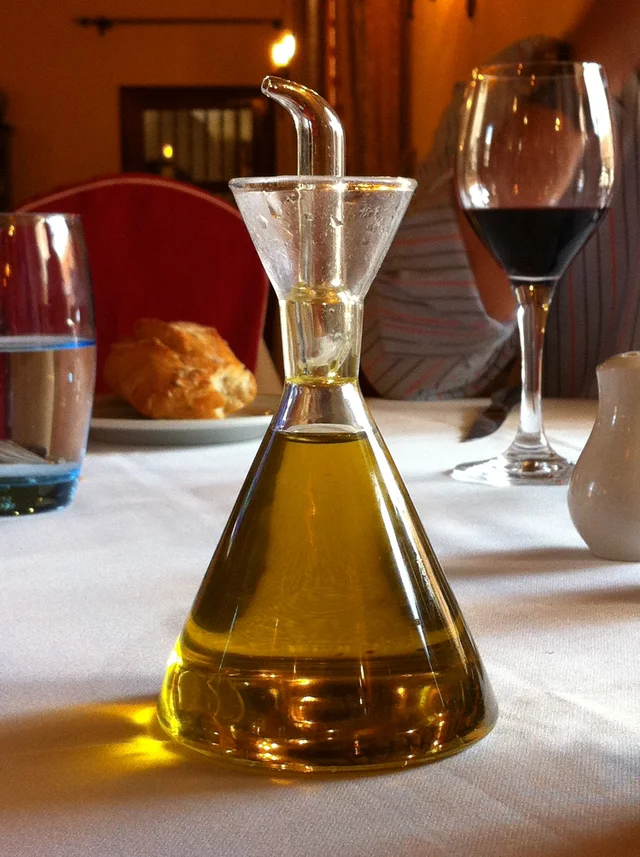

Consider the Borosil if you want the larger nominal capacity and an India-market product page; reserve it for ordinary dispensing while its heating instructions remain contradictory. Consider OXO for its smaller bottle and documented lid disassembly when using thin liquids. Neither supplies a verified measured dose, and leak or flow performance has not been independently tested.
Decide what the new bottle should solve
Write down the limitation of your existing container. Is it awkward to lift, difficult to pour from, too large for the shelf, or inconvenient to close? A dispenser should address that particular problem without adding a cleaning routine you are unwilling to maintain.
Identify the exact liquid you plan to use. Oil, vinegar, a thick dressing and ghee are not interchangeable requirements. Check the selected model's intended contents, including any restrictions on thickness or particles. Do not infer compatibility with a thick mixture because a product photograph shows a pourable liquid.
If the original packaging already works for you, a separate bottle may not be necessary. Retain the original product's storage directions and identity when deciding how to use a decanted portion; this article does not establish a new shelf life for it.
Separate controlled flow from measurement
A spout may help you vary the stream without delivering a fixed volume. If a recipe calls for a measured quantity, use an appropriate measuring utensil rather than assuming that a certain tilt or number of seconds equals a tablespoon.
Markings on a bottle also need context. Ask whether they are approximate level indicators or calibrated measurements, and whether any tolerance is documented. The presence of numbered lines alone does not establish recipe-level accuracy.
Use the same distinction when comparing a sprayer with a pourer. Do not assume one spray equals a known volume unless the exact product has supported dosing information. This guide does not establish health benefits or reduced oil consumption from buying a dispenser.
Borosil versus OXO: capacity, spout and care
Borosil Medium 500 ml, ODB2040500L
The Borosil India page identifies the medium 500 ml variant with dimensions of 6.2 × 6.2 × 25.3 cm and a product weight of 340 g. It describes a borosilicate-glass body, pouring nozzle and body markings. The care section allows soap with a soft sponge or dishwasher cleaning.
There is an unresolved contradiction in its heating guidance. Features describe flame and microwave use, while the care section includes instructions prohibiting direct flame, microwave and convection-oven use; another care line permits microwave reheating. We therefore do not recommend heating this dispenser. Obtain clear instructions for the exact bottle and nozzle assembly before considering any heated use.
Ask for instructions that distinguish the glass body, nozzle, closure and any seals. A claim about the glass does not establish what is permitted with the complete assembly attached. Clarification should identify which components, if any, must be removed and the permitted heating method and limits. Until then, do not use the dispenser as a way to melt solidified ghee or heat oil. This uncertainty concerns heated use; it does not establish a defect in ordinary dispensing.
The reviewed documentation does not establish calibration tolerance for its markings or a measured drip rate. Treat the manufacturer's drip-free description as a claim, not a result tested here.
OXO Precision Pour 355 ml, 11247900
The OXO manufacturer page identifies the 12 oz/355 ml variant and dimensions of 2.6 × 2.1 × 7.8 inches. Materials listed are borosilicate glass, silicone and stainless steel. It describes varying the pour by changing the tilt, with a folded spout lip and lid seal intended to control drips and leaks.
OXO specifies thin condiments such as oil, vinegar and soy sauce, warning that thicker dressings may clog the spout. The lid comes apart for cleaning, and the page states that all parts are dishwasher-safe. These are useful compatibility and care details; they do not establish a calibrated dose, measured leak performance or local Indian availability.
Choose capacity from your own refill routine
Record how much you currently decant over a normal period, if you already use a separate bottle. Keep the observation descriptive: it is a household handling requirement, not a recommended amount to consume. If you use two different oils, assess them separately rather than automatically buying matching capacities.
For a hypothetical comparison, a household that decants 300 ml over its chosen interval would need more than one fill of a 250 ml usable capacity, while a 500 ml usable capacity could hold that amount in one fill. That is only arithmetic. Follow the maker's fill guidance, and do not assume nominal capacity is an instruction to fill to the brim.
A larger capacity can also change how the bottle feels when filled and where it fits. Empty product weight is not filled weight. We have not established the handling comfort of either example at a particular fill level, so do not treat nominal volume as the sole decision factor.
Check the complete bottle against its storage place
Measure the shelf's usable height and depth, including the opening through which the bottle must pass. Check overall dimensions with the intended lid and spout fitted. If a handle or angled spout projects beyond the body, ask whether the supplied dimensions include it.
Reserve space to pick up and return the bottle without moving several other objects. A narrow base measurement does not establish convenient access. Follow the oil's storage instructions when choosing the location instead of assuming the spot nearest the cooker is suitable.
Keep a small comparison sheet:
| Requirement | Information to obtain |
|---|---|
| Intended liquid | Explicitly supported contents and exclusions |
| Amount to decant | Capacity and any fill-limit guidance |
| Pouring | Control method, closure and any documented dose information |
| Cleaning | Permitted disassembly and washing of each component |
| Storage fit | Complete dimensions with lid and spout fitted |
| Ownership | Exact variant, local seller and applicable support terms |
Read cleaning instructions before buying
Find out which parts can be removed and how they are reassembled. “Easy to clean” does not explain whether a seal, nozzle insert or valve is removable. Ask for the exact instructions when the listing leaves this unclear; do not force a part apart because it looks similar to another model.
Check whether the prescribed cleaning method is practical with your available tools and washing space. Plan how the components will dry according to their instructions before reuse. Do not replace model-specific care with an improvised abrasive, chemical mixture or heating method.
Make the final choice
Choose once the bottle addresses your pouring problem, supports the intended liquid and fits both your storage and cleaning routine. Resolve contradictory instructions before relying on the affected use. More features are not automatically useful if the basic refill and washing steps remain unclear.
For related decisions, see how to check kitchen-tool materials and how to avoid unnecessary multipacks. Our research method explains how documented claims differ from tested results, and our corrections policy explains how to report errors.
Sources
Read how we choose or report a correction.
Disclosure
Some product links are affiliate links. As an Amazon Associate I earn from qualifying purchases. This does not change the price you pay.
We compare published product specifications and instructions. We have not hands-on tested these products. Prices, stock and delivery can change; check the selected model and current terms before buying.