Kitchen Tools and Food Preparation
Manual Can Openers for Indian Kitchens: Mechanism, Can Fit and Care
Choose a manual can opener by checking compatibility with the cans you actually buy, the effort and movements its mechanism requires, and how you will remove the lid and clean the tool. A large knob or a “smooth edge” label is useful information to investigate, but neither establishes that a particular opener will suit every household.
3 products · Compare before you buy
Product comparison at a glance
| Product | Opening and lid-removal features | Size and care | Main purchase consideration |
|---|---|---|---|
OXO Smooth Edge 1049953 | Cuts below rim; reverse-turn release and built-in lid pliers | 7.5 × 4.5 × 2.25 inches; handwash | Smooth-edge wording is a maker claim; exact can compatibility and India variant unverified |
OXO Soft-Handled 28081 | Cushioned handles, oversized turning knob and integrated bottle opener | 7 × 2 × 3 inches; complete exact-model care procedure unverified | Starter-set page says handwash its Soft-Handled opener but does not identify individual SKU; confirm supplied instructions |
OXO Locking Can Opener 11314700 | Locks onto lid; side release button and magnetic lid lifting | 2.2 × 4.2 × 8.6 inches, axes unspecified; soap-and-water handwashing | Container compatibility and India offer unverified; no tested effort advantage |
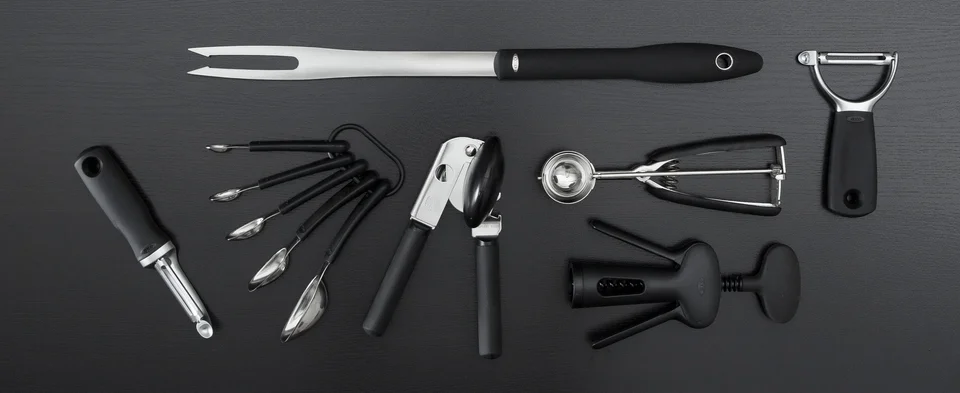
.jpg)
This guide uses manufacturer documentation and an original buying worksheet. We have not opened cans with these products, measured turning force or tested lid edges. Compare the documented mechanisms below; overseas product pages do not establish local availability.
Make a short pantry-can inventory
List the canned foods you buy repeatedly, such as beans, coconut milk or tomatoes. Record the brand and pack size, whether the container is round or another shape, and whether it has a pull tab. Measure the outside diameter and height where relevant. Keep the rim description separate from those dimensions.
The purpose is to ask a supplier a concrete compatibility question. Two containers with the same stated food weight do not necessarily have the same shape or rim. A photograph beside a familiar can is not evidence of compatibility with your whole pantry.
If your regular packs already have an opening arrangement you can use comfortably, decide what a separate opener would solve. It may serve a different can or act as a backup, but give it a defined job before buying a multipurpose gadget.
Compare the complete opening sequence
Break the task into four stages: positioning, cutting, releasing the opener and removing the lid. Read the model's instructions through all four. A tool can appear easy to turn while still requiring an unfamiliar release action or a separate lid-removal step.
The OXO 1049953 instructions illustrate why this matters. They show alignment against the can, a clockwise cutting movement, a reverse movement to release, and use of the built-in lid pliers. Those steps belong to that mechanism; do not copy them onto another opener merely because it also has handles and a knob.
Save the exact model's instructions before ordering. If a listing mixes photographs of different versions, resolve the supplied version first. A similar name is not enough to establish matching controls.
Three documented mechanisms
OXO Smooth Edge 1049953
The official product page describes cutting below the rim, a stainless-steel cutting wheel and built-in lid pliers. It specifies handwashing and dimensions of 7.5 × 4.5 × 2.25 inches. The page's weight field has no numerical value, so this guide does not supply one.
OXO says the mechanism leaves no sharp edges on the can or lid and keeps the cutting wheel out of the contents. Those are manufacturer claims, not results of a TruePicks test. They do not establish that the tool needs no cleaning or that every can shape is compatible. Consider this design when its documented lid-removal arrangement addresses your particular need, after checking the exact cans and local variant.
OXO Soft-Handled 28081
The Soft-Handled model page documents cushioned handles, an oversized turning knob, a stainless-steel cutting wheel and an integrated bottle opener. It lists dimensions of 7 × 2 × 3 inches.
These features describe the construction, but they do not quantify the squeeze or turning effort you will experience. The reviewed page did not establish a complete care procedure or a numeric weight. Obtain the instructions for the supplied variant before making those parts of the comparison. Do not borrow the other model's care or lid-handling steps. The bottle-opening feature matters only if it solves another task you actually have.
There is supporting care information on OXO's three-piece starter-set page: it names the included Soft-Handled Can Opener and specifically tells users to handwash the opener, while permitting dishwasher care for the other tools. The set page does not give the opener's individual SKU or a complete cleaning sequence. Confirm that guidance against the supplied 28081 instructions; do not read the set's general dishwasher label as permission for every component.
OXO Locking Can Opener 11314700
The manufacturer's Locking Can Opener page identifies SKU 11314700 and describes locking onto the lid, turning the knob, releasing with a side button and lifting the lid with magnetic handles. It specifies washing by hand with soap and water. Published dimensions are 2.2 × 4.2 × 8.6 inches, without axis labels in the reviewed field.
The release button and magnetic lifting arrangement offer a different sequence to investigate from the Smooth Edge model's reverse-turn release and lid pliers. Neither arrangement proves lower effort or suitability for every lid. Ask whether the exact containers on your pantry list are supported, and check the supplied instructions before choosing between them. The reviewed US page does not establish an Indian offer or local support.
Use a requirement table instead of a universal winner
| Decision factor | Evidence to record | What remains uncertain without it |
|---|---|---|
| Can compatibility | Manufacturer confirmation for the relevant rim and container type | Whether it fits your pantry cans |
| Positioning | Exact-model diagrams and hand positions | How it attaches and is supported |
| Turning | Documented control arrangement | Personal effort and comfort |
| Lid removal | Specified release and lifting method | Whether another step or accessory is needed |
| Cleaning | Full care instructions | Permitted washing and maintenance routine |
| Local ownership | Exact SKU, seller and applicable support terms | Whether overseas information applies |
This table deliberately leaves personal comfort unscored. Handle softness and knob size can be described from documentation; a claim that an opener is effortless or suitable for a particular physical limitation needs stronger evidence.
If you can inspect a demonstration model with the retailer's permission, ask to understand its controls and handling sequence. Do not infer cutting performance from rotating an unloaded knob. If turning a manual mechanism is difficult for you, compare a different mechanism or a powered option on its own requirements instead of assuming a larger handle will solve it.
Check cleaning access and storage together
Read how the maker expects the cutting mechanism and joints to be cleaned. Keep handwashing, dishwasher permission and any disassembly instructions separate. An opener described as avoiding contact with the contents still has care requirements; that description is not a cleaning exemption.
Reserve space for the complete tool in its documented storage arrangement. Compare the actual product dimensions with the usable drawer compartment, including dividers. Leave room to retrieve it as intended. Package size and product size should not be substituted for one another.
Ask about replacement parts only if you intend to rely on them. A claim that a wheel can be replaced should identify the compatible part and where it is available for your variant. A general warranty statement does not establish a local spare-part supply.
Make the final selection
Choose the opener whose instructions answer the questions your pantry inventory raised. Keep unresolved compatibility, cleaning or release details visible until the manufacturer or supplier answers them. Do not select a category winner based solely on cutting direction, appearance or an untested longevity claim.
For broader purchase planning, see how to avoid unnecessary multipacks and how to check kitchen-tool materials. Our research method explains the difference between manufacturer documentation and hands-on evidence; use the corrections policy to flag an error.
Sources
Read how we choose or report a correction.
Disclosure
Some product links are affiliate links. As an Amazon Associate I earn from qualifying purchases. This does not change the price you pay.
We compare published product specifications and instructions. We have not hands-on tested these products. Prices, stock and delivery can change; check the selected model and current terms before buying.