What to Check Before Buying a Cookware Set in India
Buy a cookware set only after checking every supplied component against a real household task. Confirm the actual vessels, lids and accessories, then assess stove compatibility, usable size, care and storage separately for each. A large piece count does not establish a complete or suitable kitchen.
2 products · Compare before you buy
Product comparison at a glance
| Product | Deep-fry pan | Frying pan | Tava |
|---|---|---|---|
SSET1 | 2.5 litres with glass lid — Reader check: Check the batch and manufacturer fill guidance; nominal capacity is not a portion count | 26 cm — Reader check: Check usable surface and stove fit separately from nominal diameter | 26 cm — Reader check: Check bread size, base and storage footprint |
SSET2 | 1.5 litres with glass lid — Reader check: Check the batch and manufacturer fill guidance; nominal capacity is not a portion count | 22 cm — Reader check: Check usable surface and stove fit separately from nominal diameter | 22 cm — Reader check: Check bread size, base and storage footprint |
What to check before choosing
| Component | Evidence to record |
|---|---|
| Identity | Exact code, size and quantity |
| Task | Named recipe or repeated household job |
| Overlap | What an existing vessel already covers |
| Fit | Recipe space, stove compatibility and full envelope |
| Components | Supplied lid/accessory correspondence |
| Care | Applicable manual and storage routine |
| Purchase | Pack confirmation, warranty and current exact offer |
This checklist uses saved Indian manufacturer evidence to illustrate the process. We have not tested the set or its cooking results. Current offer availability and any unresolved model-specific checks should be confirmed before purchase.

Inventory what you already own
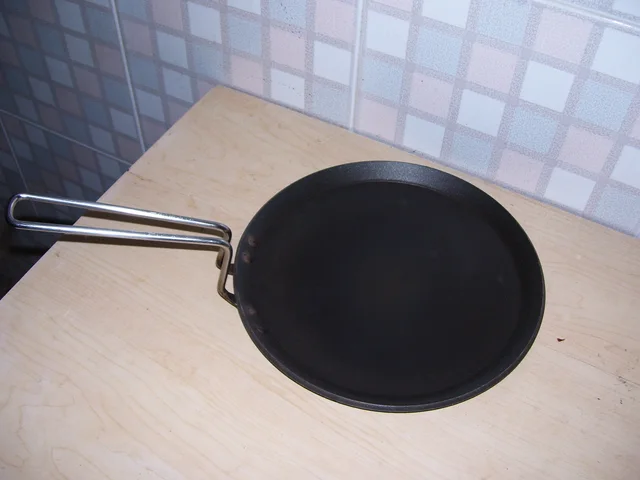
List the usable cookware already in your kitchen and the recipes it covers. Identify the actual missing tasks before looking at sets. Include any compatibility or size limitation that prevents an existing vessel from meeting a need.
For example, a household might already have a suitable tava but need a recipe-sized frying pan. A set containing another tava should then be assessed for that overlap rather than counted automatically as an additional benefit. This is a planning example, not a recommendation to replace existing equipment.
Keep planned purchases separate from aspirational recipes you rarely cook. A vessel's usefulness depends on an identifiable task and a permitted arrangement, not simply belonging to a familiar cookware category.
Translate piece count into a component list
Ask for the exact product codes, sizes and quantities. Separate vessels from lids, utensils and other accessories. Verify which items the selected pack includes rather than relying on a photograph of an entire product family.
The Hawkins set page lists SSET1 and SSET2 as three-item sets. Saved maker shop evidence names SSET1 components SSD25G, SSF26 and SSTV26. That identifies leads for component-level research; it does not resolve every supplied-pack detail.
The saved manufacturer inventory image makes the size list more specific: one 2.5-litre deep-fry pan with glass lid, one 26 cm frying pan and one 26 cm tava. Record these as three vessels with a lid described alongside the deep-fry pan. The image does not establish usable floor diameter, handle-inclusive footprint or shared-lid fit, and it cannot confirm the contents of a current seller package. Hawkins SSET1 inventory image.

Keep the selected set code in the record. A similar set name or another size's image cannot establish your pack contents. If the seller offers a selector, ensure that the component list changes correspondingly or obtain clarification.
Resolve pack contradictions before ordering
Saved text from the Hawkins SSET1 shop page describes a stainless-steel lid, conflicting with the glass-lid component evidence. It also says the components have separate manuals and guarantee cards. The exact supplied lid remains unresolved; we have not reduced that contradiction to an Amazon-only error.
Ask the maker or seller to identify the supplied lid and components for the current set. Keep the answer associated with the exact code and offer. Do not silently choose the description that is most convenient for your recipe.
Likewise, do not assume that one lid fits all vessels. Obtain explicit component correspondence where shared use matters. Matching headline diameters alone is not evidence of proper lid fit.
Map each vessel to a task
For every component, name a recipe or repeated cooking task. Record the internal shape, usable dimensions and working quantity information needed for it. Nominal litres or top diameter alone may leave recipe fit unresolved.
Then check the exact stove and cookware instructions. Compatibility of one vessel does not establish compatibility of every item in the pack. Treat lids, handles and other parts separately when an intended process involves them.
If the set includes several items for the same task, decide whether they serve distinct requirements. Different sizes can be useful, but the existence of two sizes does not prove that your household needs both.
Plan simultaneous use and storage
Consider the recipes you prepare together. Check the intended arrangement against appliance instructions and the actual vessel envelopes, including handles. This guide supplies no universal multi-burner layout.
For storage, record overall dimensions and permitted nesting or stacking arrangements. Carton dimensions do not describe the shelf footprint. A compact shipping box does not establish that the opened set will fit your cupboard.
Do not assume nesting is acceptable when the care directions require protecting a surface or lid. Obtain the applicable storage rules for each component before choosing a layout.
Compare care and warranty component by component
Read all relevant manuals. A single advertised material or dishwasher claim may not cover every vessel, lid or handle. Establish which cleaning method and utensils apply to each item.
Confirm the warranty basis and documentation for the exact pack, including how individual component claims are handled. This guide makes no warranty-duration promise for SSET1 and supplies no durability ranking.
Compare a set with the individual items needed to cover the same confirmed tasks. Include unwanted overlap in that assessment. Without verified comparable offers, we make no savings or value-per-rupee claim.
A set assessment sheet
Leave unknown fields unresolved. A set that looks complete in a photograph can still lack a documented fit for the tasks you need.
Questions before buying
Does a three-piece set contain three vessels?
Confirm how the seller counts pieces and obtain the actual inventory. The number alone does not establish its meaning.
Does one induction claim cover the whole set?
Obtain exact component declarations and compare each with your hob requirements.
Is a set always better than individual purchases?
Assess the equipment needed for your confirmed tasks and the overlap with what you own. No universal saving or completeness claim is established here.
Current offer availability and any unresolved model-specific checks should be confirmed before purchase.
Sources
- Hawkins set evidence
- Hawkins maker pack conflict
- Saved Hawkins SSET1 component-size inventory
- OmiChef OWH set product details
- Hawkins SSET2 current inventory image; private visual inspection
- Hawkins IM136 Tri-Ply manual; PDF pages 1-16 visually reviewed
- OmiChef PH24 selected variant inventory and care
- OmiChef COMBO-2 22CM Amazon package and materials fields

Read how we choose or report a correction.
Disclosure
Some product links are affiliate links. As an Amazon Associate I earn from qualifying purchases. This does not change the price you pay.
We compare published product specifications and instructions. We have not hands-on tested these products. Prices, stock and delivery can change; check the selected model and current terms before buying.