Kitchen Tools and Food Preparation
Pull-Cord Chopper vs Push Chopper for Indian Meal Prep
Choose a pull-cord or push chopper by comparing the motion you can use comfortably, the batch you prepare and the cleaning routine you can maintain. Neither mechanism establishes chopping quality, useful capacity or service life by itself.
2 products · Compare before you buy
Product comparison at a glance
| Manufacturer example | Documented mechanism | Working-space question | Main purchase consideration |
|---|---|---|---|
Borosil EazyPull | Pull-string operation | Is there room for the specified cord and hand travel? | Manufacturer page blends capacities and blade counts; those specifications are not adopted; exact variant, batch and cleaning limits need confirmation |
Ganesh Bingo Push Chopper | Manual push operation | Is there room above the handle for its specified pressing travel? | Manufacturer page does not establish locking or dishwasher claims; confirm exact instructions and supplied parts |
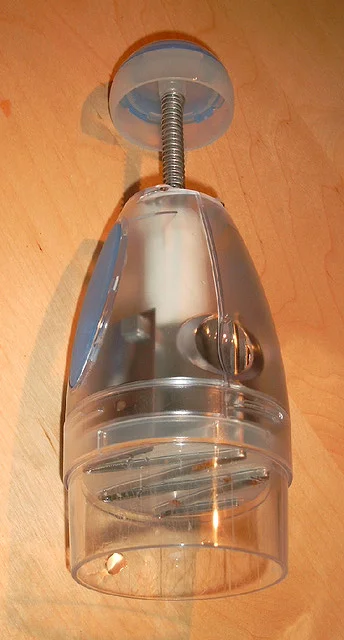

Start with the ingredients for one ordinary meal. If you mainly need roughly chopped onion for a masala, that is a different task from producing neat slices for a salad. A tool should be evaluated against the result you want, including any cutting you must do before loading it.
Consider the EazyPull when a pulling action suits your space; compare the Bingo when you prefer a pressing action. Confirm each model’s travel, permitted ingredients and care before buying. Chopping speed, hand force and durability have not been independently compared.
Identify the mechanism before comparing
A pull-cord chopper is operated by drawing out a handle attached to a cord. Borosil's EazyPull page documents this mechanism as one example. A manual push chopper uses a pressing action; Ganesh markets a separate Bingo Push Chopper. These examples establish that the categories exist, not that their performance or care instructions apply to every similar-looking tool.
Check the manufacturer's description and demonstration for the selected model. “Push” can also appear in an electric appliance's button description or on a tool that presses food through a cutting grid. Those are different operating arrangements. Confirm what moves, how the food reaches the blade and what must be assembled before use.
Do not infer an internal gear design from the word “push”. Do not assume that a pull-cord lid can be opened or repaired just because its cord is visible.
Compare the working motion
| Decision factor | Pull-cord questions | Push-chopper questions |
|---|---|---|
| Operating movement | Can you grip and draw the handle through its specified travel? | Can you press the handle through its specified travel? |
| Working space | Is there clear space for the cord and your hand? | Is there clear space above the operating handle? |
| Bowl control | How does the manual say to hold or stabilise the bowl? | How does the manual say to hold or stabilise the bowl? |
| Work height | Is the movement practical at your counter height? | Is the pressing movement practical at your counter height? |
| Storage | Where will the cord handle and lid be stored? | Does the handle have a documented storage position? |
A mechanism may suit one person and be awkward for another. If a demonstration is available, observe the complete movement rather than only the finished food. Check whether the demonstrator steadies the bowl, changes grip or moves the tool between operations.
Do not treat “easy” or “effortless” as a measured force requirement. A product description cannot establish suitability for a particular hand or wrist condition. If the movement is uncomfortable, stop assessing that tool through operation; choose a preparation method you can use comfortably.
Count the whole preparation cycle
List the work required before chopping: washing, peeling, removing unsuitable parts and cutting ingredients to the size allowed by the instructions. Then add assembly, loading, chopping, unloading and cleaning. Consider whether ingredients must be processed separately for your recipe.
For example, onion intended for a gravy and herbs intended for a garnish may need different results. A large nominal bowl is not automatically useful if it encourages you to combine ingredients that you wanted to prepare separately. Nor does nominal capacity establish a safe fill limit or the amount of a particular vegetable that can be processed at once.
Compare candidates using the same proposed batch. Record the number of reloads only when demonstrated or stated for that task. Do not turn a blade count, a pull count or a household-size label into an invented preparation-time estimate.
If you require uniform cubes, slices or a specific texture, ask for a demonstration of that result. A generic “chops vegetables” statement does not settle the question. Either mechanism can be the wrong category for the output you need.
Cleaning is a component question
Identify the bowl, blade assembly and mechanism-containing lid separately. Ask which parts are removable, how each is cleaned and how the blade is handled during removal. A broad “easy to clean” claim leaves these questions unanswered.
Check whether the instructions permit washing or soaking the lid. Check dishwasher permission for each relevant part rather than assuming it applies to the whole product. Follow the supplied instructions when handling blades; do not reach into the bowl to free ingredients while the blade assembly is installed.
Plan where washed parts can dry and where sharp parts can be stored securely. The cleaning job is part of daily meal preparation, even when the chopping action itself is brief. For general batch and workflow planning, read how to choose a vegetable chopper.
Check what happens if a part fails
For a pull-cord model, ask whether the manufacturer supplies a compatible replacement lid or mechanism. For a push model, ask the same question about the operating assembly. Check bowl and blade replacements for both types.
Request the part identifier and fitting instructions where replacements are offered. A brand's general service telephone number is not proof that a particular part is sold separately. An apparently similar replacement is not confirmation of compatibility.
Do not predict replacement frequency from the mechanism alone. Without a documented durability test or your own recorded experience, a claim that one category lasts months and another lasts years is not a sound basis for a cost comparison.
Make a task-specific choice
Consider a pull-cord model when its documented travel, grip and stabilisation method suit your working space. Consider a push model when its pressing action, working height and assembly suit you. In both cases, confirm allowed ingredients, batch limits, cleaning access and storage before buying.
Choose neither when the required preparation and cleaning outweigh the task you wanted to simplify, the desired cut is not demonstrated, or critical instructions are missing. Keep a short worksheet: desired result, preparation required, operating movement, permitted batch, cleaning steps and replacement support. Compare those answers rather than awarding a winner to an entire mechanism category.
Evidence and limitations
The manufacturer pages establish mechanism examples only. The decision worksheet is original planning guidance. No model was operated, measured or dismantled for this article. Product-specific food, cleaning and storage instructions must be confirmed for the tool being purchased.
Sources
Read how we choose or report a correction.
Disclosure
Some product links are affiliate links. As an Amazon Associate I earn from qualifying purchases. This does not change the price you pay.
We compare published product specifications and instructions. We have not hands-on tested these products. Prices, stock and delivery can change; check the selected model and current terms before buying.