Kitchen Tools and Food Preparation
Manual Citrus Press vs Electric Juicer for Occasional Use in India
For occasional citrus use, start with the size of one preparation, not how many days a week you make juice. A suitable manual tool may cover a little lemon juice for cooking without adding an appliance to store. An infrequent gathering can involve enough repeated fruit preparation to make an electric citrus press worth investigating, provided its operating limits and cleaning routine fit the task.
2 products · Compare before you buy
Product comparison at a glance
| Product | Mechanism and documented features | Size and care | Main purchase consideration |
|---|---|---|---|
IKEA UPPFYLLD 70528692 | Manual citrus tool; polypropylene | 15 cm diameter × 7 cm height; dishwasher permission | Overall dimensions do not establish supported fruit-diameter range or juice yield |
Philips HR2777/00 | 25 W electric citrus press; two cone sizes, two-way rotation; 0.5 L working bowl | Datasheet: 205 × 145 × 166 mm; motor base must not be rinsed or immersed | Stop at 0.5 L; family manual limits continuous use to ten minutes; pulp selector, cord and dishwasher claims differ by source and need revision matching |
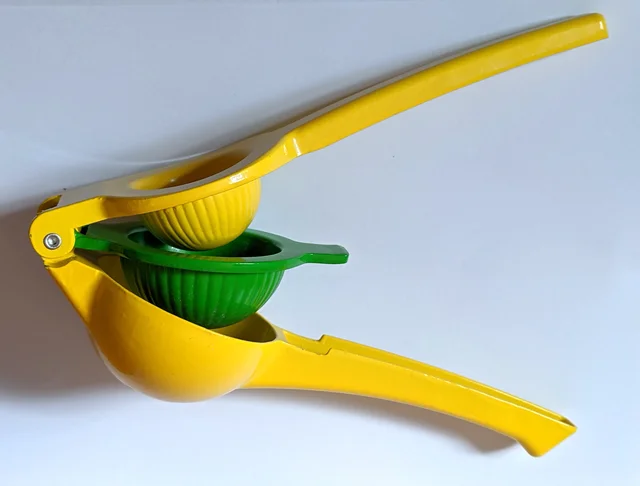

The UPPFYLLD is the simpler manual option to consider for a small preparation; HR2777/00 adds motor-driven rotation and a collecting bowl. Match the complete preparation and cleanup routine to your needs. Juice yield, hand effort and processing speed have not been independently compared.
Separate frequency from batch size
Occasional can mean squeezing a lemon into a dish once a week, or making a large jug of drinks once a month. Those jobs have different requirements despite both being infrequent. Record the number and approximate size of the fruit you normally prepare, the juice volume the recipe needs and whether that preparation happens in one session.
Do not convert fruit count into a promised juice volume. We have not measured extraction from your fruit, and a product's container size is not a yield guarantee. Keep the recipe requirement and the tool's capacity as separate entries.
Also record what you already own. If an existing tool performs the permitted task and fits your routine, a new mechanism needs a concrete benefit to justify storage. More power or a larger bowl does not by itself create that benefit.
Manual is a group of different mechanisms
A handheld hinged squeezer, a reamer and a countertop lever press ask you to support, load and operate the fruit differently. Compare the actual design rather than assuming all manual options have the same footprint or effort. A substantial countertop press can require its own permanent storage position.
As a small manual example, IKEA India's UPPFYLLD 70528692 page specifies polypropylene, dishwasher permission, a 15 cm diameter and a 7 cm height. Those are overall product measurements. They do not establish a supported fruit-diameter range or demonstrate compatibility with every small Indian lemon.
For hinged tools, fruit fit is separate from outside dimensions. Pick the loading arrangement that the exact maker documents for your fruit. Do not force an oversized half into a cup or infer a larger fruit allowance from an orange in unrelated marketing material.
Electric needs a batch routine, not just a bowl
The Philips HR2777/00 datasheet describes two cone sizes, two-way rotation, a 25 W motor and a 0.5 L working bowl. It instructs users to stop extraction at the 0.5 L level. The listed product dimensions are 205 × 145 × 166 mm, distinct from packaging dimensions.
These facts establish a collection limit and documented features. They do not tell you that a whole gathering's fruit can be processed without interruption. Check the applicable manual for operating duration, required pauses, assembly and cleaning. Emptying the bowl does not automatically reset the motor's permitted operating cycle.
The datasheet dates from 2022 and is not a substitute for the supplied instructions. A manufacturer-hosted family manual includes HR2777/00 on its cover and specification table. It describes pressure on the cone starting the motor and limits continuous operation to ten minutes. Its separate total rated-on entry does not give a numeric rest interval. These instructions illustrate why bowl capacity alone cannot define a large-session routine; confirm the manual supplied with the actual unit before planning operation.
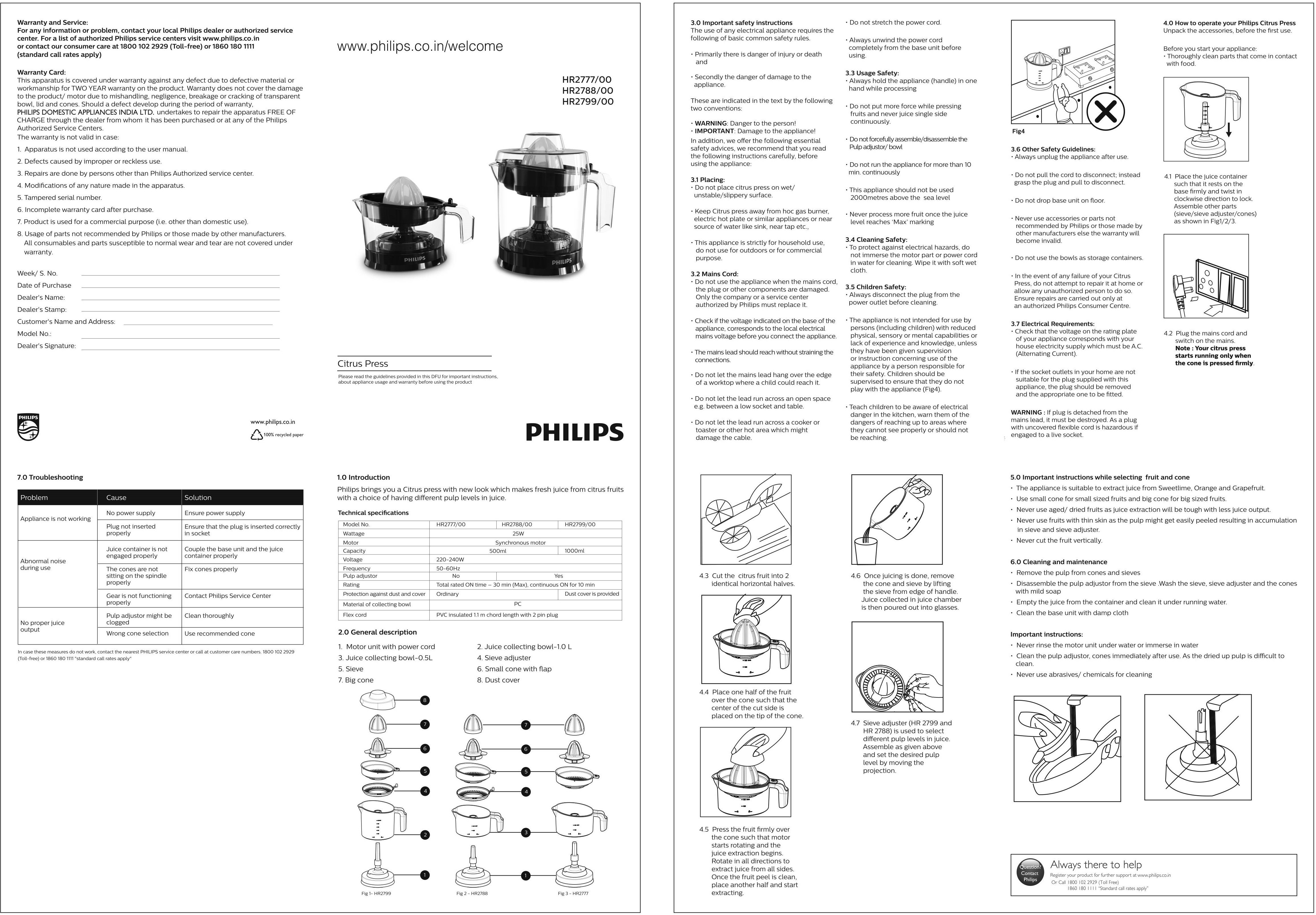
There are unresolved revision differences. The family manual lists no pulp adjuster for HR2777/00 and a 1.1 m cord, whereas the India store details recorded in our electric citrus-press guide list an adjustable pulp selector and a 1.2 m cord. Neither feature should decide this purchase until the supplied revision is confirmed.
Ask the seller for the exact model suffix, the included-parts list and the matching manual. Check the pulp-adjustment assembly and cord specification against those documents rather than a shared family photograph. A seller repeating the listing title would not resolve these differences.
Compare the same complete preparation
| Stage | Manual candidate | Electric candidate |
|---|---|---|
| Retrieve | Tool plus any separate collector or strainer | Base, cones, collector, lid and other required parts |
| Prepare | Fruit and loading method permitted for that design | Fruit and cone arrangement permitted for that model |
| Process | Required hand movement and the actual batch | Required loading and pressure, plus operating limits |
| Collect | Receiving vessel and any documented capacity | Bowl limit, pouring routine and any repeated emptying |
| Clean | Care for each component used | Care for removable components and separate base instructions |
| Store | Whole tool, accessories and clearance | Complete appliance, cord and loose parts |
For the Philips family-manual example, cleaning separates removable parts from the electrical base: it specifies washing the removable components and wiping the base with a damp cloth, and prohibits rinsing or immersing the motor unit. It does not establish dishwasher permission. The current India store FAQ separately claims dishwasher-safe components without identifying rack, cycle or component restrictions. That claim needs to be matched to the delivered revision and its instructions; it is not adopted here as a cleaning procedure. IKEA's stated dishwasher care is documented for its manual tool, while the Philips comparison remains unresolved on that point.
The purpose is to find the step that matters in your kitchen. If retrieval and storage are awkward for an appliance used once a month, powered operation alone may not solve your problem. If repeated manual movement is the obstacle, a small-looking tool is not automatically the better choice.
No timings are supplied here because we have not performed that comparison. If you already own both designs, you can record your own complete routine under their instructions. Keep fruit preparation, collection, washing and putting away within the same comparison; timing only the squeezing step answers a narrower question.
Fruit and pulp preferences come before features
List lemons, limes, oranges or mosambi separately and check each against the candidate's instructions. Two cone sizes provide options, but without numeric limits they do not prove that every fruit you buy will fit. A squeeze cup has a different fit question from a cone.
Decide whether you want pulp in the final preparation and whether you already use a separate strainer. Confirm the exact supplied filtering arrangement. Do not assume a pulp selector, seed-free result or adjustable filter from the general name citrus press.
Extraction percentages also need their test conditions before they can compare tools fairly. This guide does not repeat manufacturer extraction claims as independent results or promise that a motor recovers more juice than a manual design.
Choose for the session you actually have
Consider the manual option when your permitted fruit and batch fit its mechanism, you accept the required movement and its complete storage arrangement is convenient. Consider the electric option when motor-assisted operation addresses a recurring difficulty within that session and the documented cycle, collection and upkeep requirements are acceptable.
Choose neither candidate if essential fruit-fit or operating information remains unresolved. Occasional use does not excuse an unsuitable tool, and frequent use does not prove that an electric appliance is necessary. Finish the comparison with the exact product and supplied parts, not a category stereotype.
Our research methodology explains the evidence basis. Use the corrections channel for changed specifications or conflicting instructions.
Related: handheld lemon-squeezer guide.
Related: electric citrus-press guide.
Sources
Read how we choose or report a correction.
Disclosure
Some product links are affiliate links. As an Amazon Associate I earn from qualifying purchases. This does not change the price you pay.
We compare published product specifications and instructions. We have not hands-on tested these products. Prices, stock and delivery can change; check the selected model and current terms before buying.