How to Measure Counter Space Before Buying an OTG in India
Measure counter space for an OTG using its exact body dimensions, specified installation clearances, door movement and handling arrangement. The advertised footprint is only part of the space it needs in use. Do not approve a location simply because the closed appliance fits between two objects.
2 products · Compare before you buy
Product comparison at a glance
| Product | Purchase consideration | Important limitation |
|---|---|---|
Borosil Prima Pro 10 L BOTG05 | Published product size: 38 × 28.5 × 20.5 cm | Operating clearance and current control revision still need confirmation |
Borosil Prima 24 L | Larger nominal cavity for comparison with your pan requirements | Nominal litres do not establish the installed footprint or usable rack space |
What to check before choosing
| Measurement or instruction | What to record |
|---|---|
| Body dimensions | Exact model, orientation and source |
| Side and rear clearance | Exact applicable instructions |
| Space above | Required clearance and nearby structures |
| Door movement | Open-door projection and unobstructed access |
| Handling arrangement | Access for the prescribed tray or rack procedure |
| Counter surface | Manufacturer placement requirements |
| Electrical point | Supply, plug and supplied cord requirements |
This guide uses Borosil Prima 24 L specifications and the reviewed BOTG24RBB31 and BOTG05 10 L manuals as examples. We have not inspected your kitchen or approved either installation. Complete applicable instructions remain necessary before choosing a location.
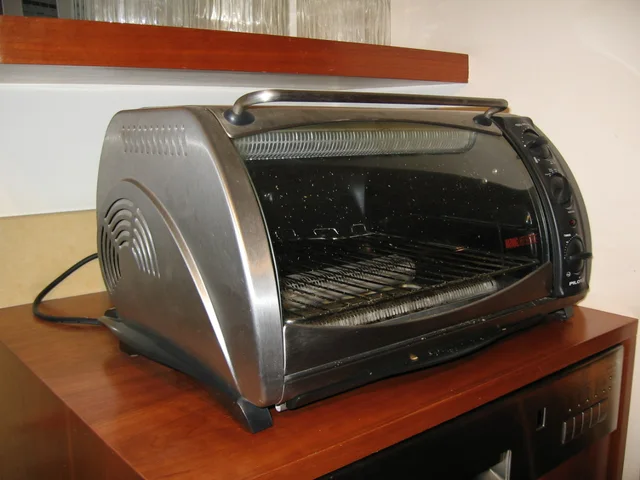

Start with the exact model and dimension basis
Borosil's Prima 24 L page lists product dimensions of 44.3 × 35 × 29 cm and interior dimensions of 33.3 × 30.3 × 23.8 cm. The exact BOTG24RBB31 manual has been reviewed, but it contains conflicting rear-placement instructions; maximum permitted pan dimensions remain unverified. Prima 24 L page.
Keep external, internal and packaging dimensions in separate entries. A carton measurement does not describe the body, while interior box measurements do not establish where a pan may sit relative to heaters or other parts. Confirm the orientation of each external measurement before drawing the appliance on your counter plan.
Record the full model code and the document supplying each number. Do not borrow a dimension from another capacity in a grouped listing. Similar product names can conceal different bodies, doors or instructions.
Measure the available counter area
Measure the proposed location's width, depth and space above it. Note walls, cupboards, shelves and neighbouring appliances. Record the actual usable surface rather than counting an area occupied by another item you expect to move occasionally.
Draw a simple plan and mark the electrical point and the route the supplied cord would need. Also note where the door opens and where you would stand to load or remove permitted cookware. Keep the measurement exercise separate from a final installation approval until the applicable instructions have been checked.
Do not enter zero for a clearance that is unknown. Leave it unresolved and obtain the relevant instructions. A plan with every field filled by guesses is less useful than a plan that clearly shows the missing evidence.
Do not transfer clearance rules between models
The linked BOTG05 10 L manual illustrates why exact instructions matter. Inspected pages specify a minimum 12 cm on all sides in one place and describe the rear against a wall elsewhere. That contradiction has not been resolved. BOTG05 linked manual.
Neither statement has been adopted as a verified installation rule for this example. Ask the manufacturer to clarify the applicable model and placement requirements. Do not average conflicting numbers or choose the instruction that makes a preferred location fit.
The independently reviewed Prima 24 L BOTG24RBB31 manual contains the same unresolved combination: at least 12 cm on all sides on one page, with rear-against-wall wording on another. This observation comes from its own manual, rather than transferring the 10 L rule. Neither manual establishes a verified zero rear gap. Request the exact model’s corrected installation guidance before approving a tight recess.
Include door access and cookware handling
Check the door's actual opening arrangement and the documented method for handling trays or racks. Account for the space needed to follow that method without obstruction. Closed-body dimensions alone do not establish that you can operate the appliance comfortably in a narrow recess.
Obtain the relevant open-door measurements or inspect the exact model through an authorised demonstration. Record what was measured rather than extrapolating from a product photograph. Perspective and staging do not supply a reliable door projection.
Plan where permitted cookware will go during the prescribed handling and cooling routine. Confirm the instructions before selecting a nearby landing area. This is a workflow check, not permission to place hot cookware on an unspecified surface.
Check cookware fit separately from counter fit
An OTG can fit the counter while failing to accommodate your intended pan in a permitted arrangement. Measure the cookware, including handles or protruding parts, and compare it with exact rack, heater and loading instructions.
The Prima 24 L interior dimensions do not establish a maximum pan size. Its manual limits food on the cooking tray or grill rack to 1 kg, evenly distributed, and refers recipe shelf positions to the supplied cookbook. That weight limit does not establish pan dimensions, simultaneous multi-tray permission or a rotisserie load. Do not buy a tin just smaller than the cavity measurements and assume it is approved; confirm the actual rack, heater and recipe arrangement.
If you already own essential cookware, list it before comparing appliances. Keep counter fit and cookware fit as two separate decisions. Neither nominal litres nor an interior volume calculation resolves both.
Verify the surface and electrical arrangement
The Prima 24 L manual calls for a stable, heat-resistant surface, attended use and no items placed on the open glass door. It prohibits covering the crumb tray or appliance parts with foil. These requirements belong in the space assessment, but they do not approve an arbitrary shelf or enclosure. Its contradictory rear-clearance text still needs clarification.
The Prima 24 L page lists 1600 W and 230 V/50 Hz. That rating alone does not establish the supplied plug requirements or approve a particular electrical point. Resolve any installation mismatch through a qualified electrician rather than improvising an adapter or changing the supplied arrangement.
Likewise, do not count storage space as operating space without verifying the move, placement and cooling instructions. The inspected BOTG05 manual requires thorough cooling before handling and says not to move it while plugged in. Those observations belong to that exact example, not a universal operating procedure.
Decide whether the location is verified
Approve the space assessment only when the exact model's body, clearances, opening, handling, surface and electrical requirements are established and match the measured location. If one requirement remains unknown or contradictory, record the location as unresolved.
Keep the completed worksheet with the model code and applicable instructions. Recheck it when either the appliance or the proposed location changes. A measured fit is useful purchase evidence; it does not certify an installation or resolve contradictory manufacturer instructions.
Sources
Read how we choose or report a correction.
Disclosure
Some product links are affiliate links. As an Amazon Associate I earn from qualifying purchases. This does not change the price you pay.
We compare published product specifications and instructions. We have not hands-on tested these products. Prices, stock and delivery can change; check the selected model and current terms before buying.