Kitchen Tools and Food Preparation
How to Choose Ladle Sizes for Indian Family Cooking
Choose ladle size using the pot opening, receiving dish and intended food, then consider how much one transfer should carry. The number of people eating does not determine a universal ladle volume. A large pot of dal may still be served into small bowls.
2 products · Compare before you buy
Product comparison at a glance
| Product | Working end and documented features | Care and dimensions | Main purchase consideration |
|---|---|---|---|
IKEA 365+ HJÄLTE 101.615.92 | Steel lower part; reinforced-polyamide and silicone handle | 34 cm; dishwasher care; 220°C claim | Bowl volume and opening unverified; check cookware permits metal contact |
OXO Silicone Everyday Ladle 11282200 | Flexible front and side edges; central supporting core; non-stick suitability stated | Dishwasher care; numeric dimensions and heat limit absent | Bowl capacity and India offer unverified; dripping performance not tested |
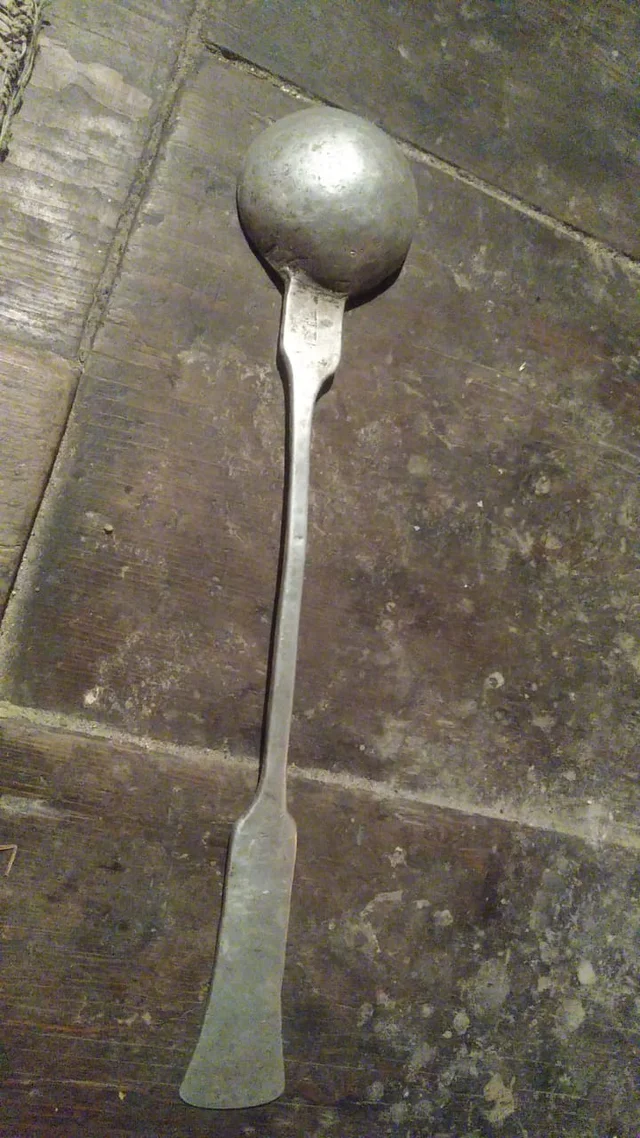

Start with the opening of your pot and serving bowls, then compare the two ladles’ working ends and care requirements. Their published specifications do not establish bowl capacity. The transfer-count example below illustrates the calculation once a working volume is known; it is not a measured result for either product.
Read the product choices
The table uses the two documented candidates from our ladle comparison. Neither source establishes a numeric bowl capacity. Their steel and silicone working ends help compare cookware contact and care, but do not fill that sizing gap or prove a transfer-count advantage.
Record the vessels at both ends
Measure the relevant opening of the cooking vessel and the receiving dish. Record any rim, lid position or shape that limits access. Keep outside diameter separate from the clear opening the tool must pass through.
Next write down the foods you normally serve with the ladle. A thin liquid and a mixture containing large pieces present different fit questions. Record the largest relevant piece as part of your requirement without assuming the ladle can be overloaded to accommodate it.
Include the intended serving position in your sketch. A tool that fits inside the pot still has to be withdrawn and moved as permitted by its instructions. This guide does not calculate a safe handle distance from a heat source or approve a particular hot-use movement.
Understand three different meanings of size
Head size describes the physical opening and depth of the ladle bowl. It helps you assess access and food fit. Volume describes a quantity the bowl can contain under a defined filling condition. Length describes the whole utensil or, where explicitly stated, a particular handle section.
These measurements are not interchangeable. A wide shallow head and a narrow deep head can present different access needs even when a nominal volume is similar. A long tool does not necessarily have a larger bowl.
The IKEA HJÄLTE 101.615.92 page illustrates the documentation gap: it lists a 34 cm overall length, but its product measurements do not supply bowl volume. The 10 cm width and 9 cm height appear under packaging, so they do not establish the head's dimensions. Those missing values should stay unknown rather than being estimated from a photograph or the package.
Ask what a capacity figure actually means
If a seller supplies millilitres, ask how that volume is defined. Is it a level fill, a brim-full measure or a stated working quantity? A bowl's maximum contained volume may not describe how you intend to carry food with it.
Do not assume a capacity label is calibrated for portion measurement. If consistent measured portions are essential to your task, obtain a tool and documentation intended for that use. An ordinary ladle is not automatically a certified measuring vessel.
You can compare an existing household tool with a new candidate only when the measurements mean the same thing. A remembered scoop size and a seller's undefined millilitre claim are not yet comparable evidence.
A transfer-count example
Suppose a hypothetical preparation volume is 1,200 ml and a hypothetical documented working transfer is 100 ml. Dividing 1,200 by 100 gives twelve transfers. With a 150 ml working transfer, the arithmetic gives eight.
This does not establish which ladle is faster, more comfortable or more suitable. The example assumes equal complete transfers and ignores residual food, mixed solids, different serving quantities and the time needed to move the tool. It also does not prove that filling either real ladle to that amount is permitted.
Use such arithmetic only after the quantity and working-volume definitions are sound. Otherwise, compare physical fit and instructions first rather than presenting an uncertain transfer count as a purchase benefit.
Match the head to your receiving dish
For a small katori, compare the clear opening with the ladle head and intended pouring arrangement. For a larger serving bowl, check the same relationship rather than assuming size is irrelevant. Any food pieces you want to keep intact must also fit the intended transfer.
A paper outline can help compare outside footprints using an empty, cool layout. It cannot test grip, dripping, balance or stability. Do not use an outline as a substitute utensil or infer hot-use performance from the exercise.
Consider whether one tool is actually needed at the stove and a different one at the table. Choose separate tools only when the tasks justify them; a family-size label does not itself establish that need.
Turn familiar meals into fit questions
Use the meals you cook to decide which missing dimension to pursue first. The examples below are planning prompts, not tested ladle recommendations.
| Household task | First question to resolve | What a larger capacity would leave unanswered |
|---|---|---|
| Serve dal from a large pot into small katoris | Can the head and intended pour work with the receiving opening? | Whether the transfer can be directed into those bowls |
| Serve sambar containing vegetable pieces | Do the bowl shape and intended transfer accommodate those pieces? | Whether the pieces fit without an overfilled scoop |
| Transfer a thin curry to a serving bowl | What working quantity and pouring arrangement are documented? | Dripping, balance and actual handling |
| Serve a small amount of gravy at the table | Does an existing serving tool already suit the dish and quantity? | Whether another utensil is needed at all |
For example, discovering that the family's katoris are the limiting opening changes the next step: obtain head geometry before comparing large capacity labels. The number of diners still helps you plan the overall food quantity, but it does not resolve this physical fit question.
Include handle and storage dimensions
Measure the complete storage position, including the opening of a drawer and any obstruction inside it. A curved ladle can require more depth than a flat utensil of the same length. Where the head is deeper than the handle, record both parts of the stored profile.
Check how the intended grip is described and whether the handle is compatible with your use and cleaning routine. Overall length alone gives no guarantee of a cool grip, easy reach or comfortable loaded handling.
Your sizing worksheet
| Field | Record |
|---|---|
| Source vessel | Clear opening, shape and relevant instructions |
| Receiving dish | Opening and intended placement |
| Food | Consistency and largest relevant pieces |
| Head | Documented outside geometry and usable bowl scope |
| Volume | Defined working quantity, if established |
| Handle | Complete length, angle and intended grip |
| Care and storage | Washing method and complete stored footprint |
Choose dimensions that satisfy the worksheet with evidence. If a source gives only one length, keep the other fields open and obtain clarification. A complete shorter tool may suit your use better than a larger one with unresolved fit.
For a documented candidate and its limitations, read the ladle selection guide. Our methodology and corrections page explain the evidence standard.
Sources
Read how we choose or report a correction.
Disclosure
Some product links are affiliate links. As an Amazon Associate I earn from qualifying purchases. This does not change the price you pay.
We compare published product specifications and instructions. We have not hands-on tested these products. Prices, stock and delivery can change; check the selected model and current terms before buying.