Food Storage and Kitchen Organisation
How to Check Food-Contact and Microwave-Use Claims on Containers
Before buying a food container, match its exact model to the food and appliance use you need. A storage claim, dishwasher permission and microwave permission answer different questions. Compare the body and lid separately: an instruction that permits heating the bowl may still require removing the cover.
3 products · Compare before you buy
Product comparison at a glance
| Product example | Documented use | Important boundary |
|---|---|---|
Borosil Klip n Store BGFGBKNS0105, 320 ml | Glass container with microwave and oven use instructions | Plastic lid is excluded from microwave and conventional oven use |
Sistema Yogurt TO GO 21466ZS, two 150 ml pots | Microwave reheating of precooked food without lids, subject to care restrictions | Reheating permission is not a cooking permission; transport warning says not leakproof |
Sistema Ultra Square 51401ZS, 700 ml | Pantry storage in a stackable range | Ultra care instructions do not recommend microwave or freezer use |
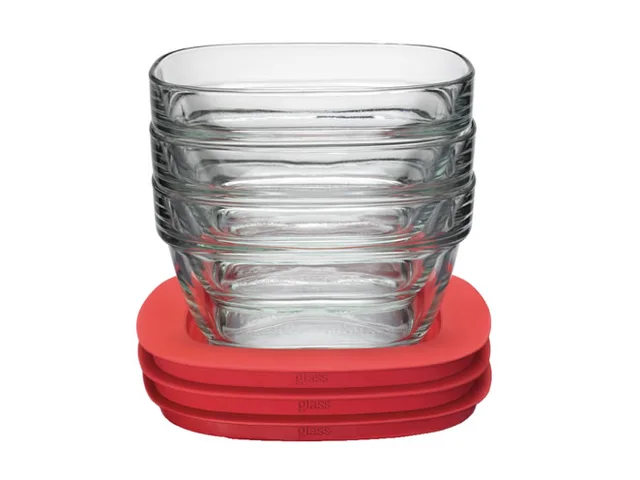

Consider Borosil when a small glass dish with lid-off heating fits your meal. Compare TO GO for two smaller reheatable portions, following its restrictions. Choose Ultra for pantry storage when heating and freezer use are unnecessary. The two Sistema ranges are different products with different instructions.
Start with the job you want the container to do
Write down whether the purchase is for dry groceries, cold food, transporting lunch or reheating a prepared meal. Then identify the components involved in that job. A lunch set may include a body, lid, seal, divider, spoon and outer carrier; they do not automatically share the same permissions.
If you need to reheat lunch, the microwave instructions matter before the container's colour or pack count. If you only need a pantry jar, heating capability may add no useful benefit. Choosing by your actual use avoids buying a broad feature label that does not cover the part you intend to heat.
Match the code before borrowing a claim
Keep the full product code beside the size and pack description. A familiar brand name is not enough: the two Sistema examples above belong to different ranges with different instructions. Do not apply the TO GO reheating directions to Ultra simply because both are plastic containers from the same manufacturer.
Likewise, check whether a retailer is offering the complete Borosil container or only a replacement lid. A photograph of several sizes may describe the family while the selected offer supplies one specific size. The selected variant, included components and applicable instructions need to agree.
Read beyond the headline
Look for the use-and-care section and any linked instructions. For the Borosil example, the glass body's use permissions sit alongside a specific prohibition on heating the plastic lid. Reading only a microwave-safe headline could miss the component distinction.
For Sistema TO GO, the instructions distinguish reheating precooked food from cooking and require removing the lid. The page also gives food-related restrictions. A short comparison table helps find the right document, but it cannot replace those detailed conditions or the microwave manufacturer's instructions.
If two parts of a listing conflict, keep the conflict visible. Do not choose the more permissive statement simply because it suits your planned use. In particular, a temperature number alone does not establish permission for every appliance mode, heating duration or component.
Separate food contact from kitchen organisation
A box sold for kitchen organisation may hold accessories without being intended to touch food. IKEA's examined RISATORP basket and SAMLA box listings explicitly say they are not approved for food contact. Their usefulness in a kitchen does not turn them into loose-flour or rice containers.
An outer organiser and an ingredient container therefore answer different buying needs. Keep the food-contact assessment attached to the item that actually touches the food. Material appearance, a transparent wall or a tidy pantry photograph cannot replace the exact product's stated intended use.
Treat each permission separately
For each shortlisted product, record storage use, microwave use, lid handling, freezer use and cleaning instructions in separate fields. Leave a field unresolved when the relevant instruction is missing. Dishwasher permission does not establish microwave permission, and a storage seal does not establish liquid-transport performance.
Check whether instructions address the exact range and revision you will receive. A manual for another size or older model may be useful background, but it should not silently supply missing permissions for your selected pack.
Make the buying decision
Choose the container whose complete instructions support your intended routine with manageable handling and cleaning. A pantry-only container can be a suitable purchase for dry storage even when it is unsuitable for reheating. A reheating container can be inconvenient if its required lid-removal or cleaning routine does not fit how you use it.
These examples compare published instructions. We have not conducted migration, heating or durability tests, and the comparison does not certify any product's compliance. Its purpose is to help distinguish a documented use from an assumption before you buy.
Product documentation reviewed on 11 October 2026.
Sources
Read how we choose or report a correction.
Disclosure
Some product links are affiliate links. As an Amazon Associate I earn from qualifying purchases. This does not change the price you pay.
We compare published product specifications and instructions. We have not hands-on tested these products. Prices, stock and delivery can change; check the selected model and current terms before buying.