Small Wet Grinders for Two People: Batch Limits and Timer Choices
A wet grinder for two people should handle the ingredient batches you regularly make, including the small ones. Start with documented minimum quantities before deciding that a 1.25 L drum is suitable. This focused comparison examines the Indian 230 V versions of Elgi Ultra Mini and Mini T. Both have manufacturer-linked batch tables; we have not tested their batter or established the best small grinder across the market.
2 products · Compare before you buy
Product comparison at a glance
| Product | Advertised capacity | Electrical specification | Rice before soaking | Dal before soaking | Timer | Product L × W × H | Net appliance weight | Important unresolved detail |
|---|---|---|---|---|---|---|---|---|
Ultra Mini, India manual | 1.25 L | 85 W; 230 V, 50 Hz | 106–780 g | 41–195 g | No automatic timer on maker page | 410 × 230 × 260 mm | 8.8 kg | Amazon gallery caption conflicts with 85 W text |
Ultra Mini T, India manual | 1.25 L | 85 W; 230 V, 50 Hz | 106–780 g | 41–195 g | Automatic timer and buzzer | 410 × 230 × 260 mm | 9 kg | Timer warranty differs between page and manual |

Choose by your regular quantities
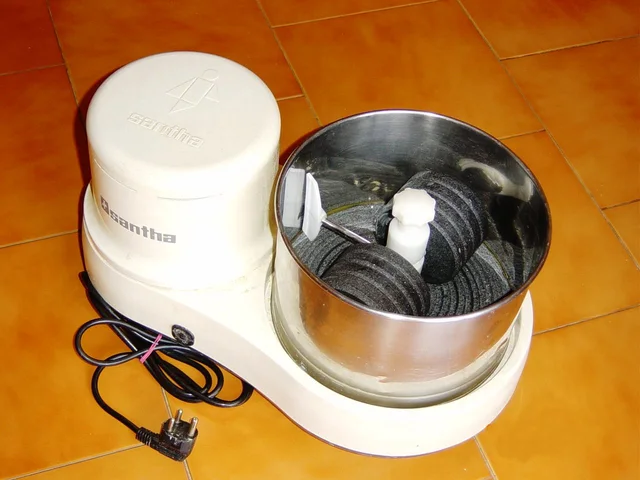
Consider Mini if your rice and dal quantities fit the applicable instructions and you do not need a built-in timer. Consider Mini T if the same batch range fits and preset stopping is useful to your routine. Its timer adds a control feature, not a larger documented ingredient range.
If either regular ingredient quantity falls below the documented minimum, neither candidate has established suitability for that preparation in this guide. Do not enlarge the recipe merely to justify a purchase. Record how often you would face that mismatch and compare equipment whose applicable instructions cover your intended quantity.
This is a two-model comparison rather than a broad list of winners. The adjacent large-grinder guide compares other drum arrangements; here the decision is whether these documented small-batch limits and the timer distinction answer a two-person household's needs.
Compare the same electrical versions
The batch figures come from the Mini manual and Mini T manual, PDF page 5 in each. They are recommended measurements before soaking, for separate rice and dal grinding, with a laboratory-condition caveat. They are not post-soak weights or a combined ingredient allowance.
Check both ingredients independently
Make a simple record of one ordinary preparation. For this screening exercise, weigh the dry rice and dry dal separately before soaking and compare each with the corresponding range. Do not compare the total recipe weight with only the rice maximum. A combined total can conceal a dal quantity below its stated minimum.
For example, suppose your intended preparation uses 100 g rice and 50 g dal before soaking. The dal falls within the documented interval, but the rice is below 106 g. This hypothetical preparation therefore fails the documented-range screen for both candidates. It is an arithmetic example, not a recipe recommendation or a claim that the grinder physically cannot move a smaller quantity.
A hypothetical preparation using 200 g rice and 60 g dal passes that quantity screen. Passing it does not prove a preferred texture, a particular yield or a specific number of breakfasts. You still need the applicable preparation, water and loading instructions and a satisfactory result for your recipe.
Record the ordinary batch and the smallest batch you would realistically make. An appliance that covers occasional larger cooking but leaves the frequent small preparation unverified may be a poor fit for your routine. Conversely, do not choose only around the smallest possible quantity if your normal preparation repeatedly exceeds a documented maximum.
Mini: assess the batch before the size label
The Mini's manufacturer specification lists no automatic timer or buzzer. Its linked manual describes an on/off operating sequence. It is a candidate when the documented range fits and that control arrangement meets your needs.
The observed Amazon listing names the white 1.25 L model. Its title and feature text say 85 W, consistent with the India manual, but one gallery caption says 150 W. Confirm the rating on the actual offered unit rather than treating the inconsistent caption as an upgrade.
The word “Mini” does not establish comfortable handling for every person or a fit on every counter. Check the space and movement required for your household. Nor does family-size marketing establish the number of meals obtained from a particular quantity of ingredients.
Mini T: decide what the timer solves
The Mini T manual describes a buzzer and automatic stopping at the preset grinding time. After a power interruption, it says to press ON to resume the remaining timer duration. The current India product page also lists the timer and buzzer.
Consider this control if preset stopping answers a concrete problem in your cooking routine. It does not establish that the batter has reached your desired endpoint or authorize unattended operation. No independent texture or time-saving test has been performed here.
Warranty needs clarification: the linked manual says one year on the timer, while the current product page says two. Confirm the applicable written terms for the purchased unit before relying on either duration. The exact Amazon India Mini T offer has not yet been verified in this guide.
A two-person ownership worksheet
| Question | Your record | How to use it |
|---|---|---|
| Smallest ordinary preparation | Separate pre-soak rice and dal weights | Check each against its own minimum |
| Largest ordinary preparation | Separate pre-soak rice and dal weights | Check each against its own maximum |
| Cooking frequency | How often you prepare this batch | Identify the preparation the appliance must routinely serve |
| Control requirement | Whether you need preset stopping | Compare Mini's switch with Mini T's timer |
| Working location | Measured usable space | Compare product dimensions and removal clearance |
| Storage arrangement | Where the dry unit and parts will go | Assess the full ownership routine |
| Cleaning method | Applicable component instructions | Avoid assuming every part has the same washing permission |
| Offer identity | Model, rating, colour and bundle | Keep India and export configurations separate |
The worksheet helps organise a purchase decision; it does not calculate servings or prescribe fermentation and storage practices. Use your established recipe and appropriate food-handling guidance for those decisions.
Allow for handling and cleaning
Both manuals list a 1.7 kg stone assembly. That is different from net appliance weight and does not establish the weight of a loaded drum. Assess the actual components and the route to your sink if handling is a deciding factor. We have not measured lifting comfort or compared cleanup times.
The Mini manual calls for cleaning the drum and roller assembly after use, prohibits washing or immersing the body under running water, and says to lift the appliance at its base. Mini T adds a warning to keep water out of the timer. Use the complete applicable instructions; this article does not provide permission to put components in a dishwasher.
A smaller headline capacity does not eliminate the need for setup, transfer and cleaning space. Ask to see the removal method in a suitable demonstration if the arrangement is unclear. Do not infer the required open-lid clearance from the closed product height.
Verify the Indian offer
The manufacturer manual selector offers Mini, Mini T and separate 110 V versions. This comparison uses the non-110 V selections whose manuals state 230 V, 50 Hz. Do not copy an export listing's electrical rating, accessories or warranty into the India comparison.
Confirm the supplied manual and accessory bundle as well as the model name. Optional kneading and scraping accessories are separate from the small-batch idli/dosa decision. Their presence in a photograph does not prove inclusion in the selected offer.
Stock and delivery require a fresh check for the intended Indian PIN. This guide does not promise a price or delivery date, and the candidates are research examples rather than purchase endorsements.
Useful questions
Does Mini T grind a smaller batch than Mini? The reviewed manuals give the same rice and dal ranges. No smaller minimum is established for Mini T.
Can I convert the dry weights into soaked weights? This comparison supplies no conversion. Compare the measurements at the stage identified by the source table.
Does a timer mean better idlis? No finished-food result is established by the timer feature. Choose it for its documented control behaviour if that behaviour is useful.
Should two people always choose 1.25 L? Household size alone is insufficient. The ordinary batch, minimum quantity, larger preparations and handling routine should all fit.
What should I settle before buying? Match your separate ingredient quantities, confirm the exact electrical version and instructions, assess handling, clarify the Mini listing discrepancy or Mini T warranty, and verify the current offer and delivery.
Sources
Read how we choose or report a correction.
Disclosure
Some product links are affiliate links. As an Amazon Associate I earn from qualifying purchases. This does not change the price you pay.
We compare published product specifications and instructions. We have not hands-on tested these products. Prices, stock and delivery can change; check the selected model and current terms before buying.