Food Storage and Kitchen Organisation
A Pantry Organisation Checklist for Your First Indian Apartment
Set up a first-apartment pantry around the groceries you actually buy and the shelves you already have. Begin with suitable ingredient containers, then add organisers only where access is awkward. A coordinated set can wait until you know which sizes you use repeatedly.
3 products · Compare before you buy
Product comparison at a glance
| Product example | Documented size | Pantry job to consider | Main limitation |
|---|---|---|---|
IKEA 365+ dry-food jar 101.340.23 | 1.3 L; 17 × 8 × 18 cm | Individually accessed dry ingredients with a pouring opening | Ingredient pack-mass fit is not established by litres |
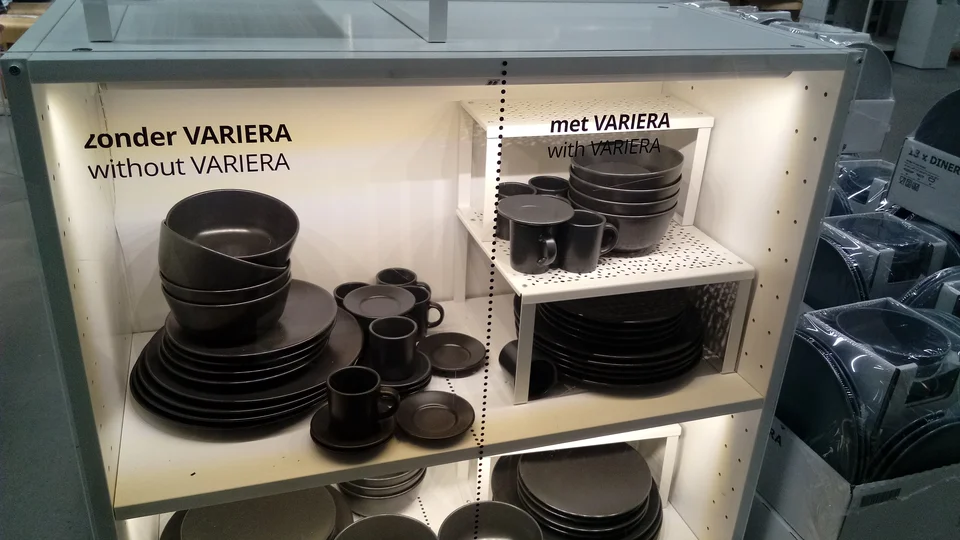
IKEA VARIERA 701.777.26 | 32 × 13 × 16 cm | Use spare height within a suitable cupboard | Clear height below and numerical load limit remain unverified |
IKEA RISATORP 604.805.44 | 25 × 26 × 18 cm | Group packaged supplies or accessories | Not approved for direct food contact |
_02.jpg)
Start with a grocery inventory
List the staples you expect to use during a normal week: rice, atta, dal, tea, coffee, spices, snacks and any baking ingredients you actually cook with. Record the pack size you usually buy and how often you replenish it. Separate a working quantity kept within reach from any unopened reserve packs.
Do not buy a container for an ingredient merely because it appears in a pantry photograph. Your first purchase should solve an existing storage need. If a suitable container is already available, record it before adding another to the shopping list.
For each item, note whether it needs a pouring opening, scoop access or simply a place to keep its intact package. These differences determine the useful container shape more directly than a matching colour scheme.
Measure the available shelves
Record clear width, depth and height, including restrictions from hinges and door fittings. Measure the opening through which a container must pass as well as the space inside. Leave room to grip and remove items, not just enough space for them to stand in a tightly packed row.
Place frequently used ingredients where they can be reached directly. Use less convenient positions for occasional items if their storage instructions allow that location. Avoid making daily access depend on moving several other loaded containers.
Check the shelf's own support and load information before planning a heavy arrangement. A storage organiser does not increase the load the cupboard can support.
Choose a few useful container sizes
The IKEA 365+ example is a 1.3 L dry-food jar with a lid that can open partly for pouring or come off for filling. That arrangement is worth comparing for ingredients you dispense regularly. It does not establish that a particular kilogram pack of rice, dal or flour fits inside.
Match the ingredient and intended fill to a verified size. If the full grocery pack will not fit, plan the remainder's storage rather than forcing it into the working jar. Keep useful package information with the ingredient so that transferring it does not lose its identity or instructions.
Before buying several identical jars, confirm that the opening, dimensions and cleaning routine suit the first intended job. One satisfactory size for tea does not automatically suit atta or a large bag of rice.
Add organisers only where they improve access
VARIERA's shallow insert provides a raised platform within a compatible cupboard. Its listed 16 cm overall height is not a verified 16 cm clearance underneath. Measure the items above and below, and allow enough room to take them out. No numerical load limit has been established in the evidence used here.
RISATORP offers a different job: moving a group together. It may help keep packaged breakfast supplies or small kitchen accessories in one place. Its food-contact exclusion means it should not hold loose ingredients directly. Keep those in suitable primary containers or intact packaging.
Neither organiser is compulsory. If the shelf already allows easy access, adding another layer or basket may simply consume useful space.
Make the purchase list specific
Write each proposed purchase as an exact size, quantity and job. Include lids and any separately sold components. Compare the complete pack with that list rather than choosing the largest assortment available.
Record the relevant care instructions before assigning the item a use. The examined IKEA dry-food jar lists upper-basket dishwasher cleaning and a 70°C limit; that does not establish microwave permission. Keep storage, cleaning and heating claims separate.
For an online order, match the selected variant to the documented model and dimensions. Check current delivery and seller terms for that selection, since a family photograph or starting price may describe a different pack.
First-apartment pantry checklist
- Inventory existing containers and normal grocery quantities.
- Measure shelf openings, usable interiors and removal clearance.
- Select ingredient containers for actual portions and dispensing needs.
- Keep food-contact containers separate from outer organisers.
- Give frequently used ingredients direct access.
- Add a riser or basket only for a specific space or retrieval problem.
- Confirm exact pack contents and component care before ordering.
This is a buying plan supported by documented product examples, not a tested complete pantry system. Build the arrangement around everyday use, then expand only where the first setup leaves a specific need unresolved.
Sources
Read how we choose or report a correction.
Disclosure
Some product links are affiliate links. As an Amazon Associate I earn from qualifying purchases. This does not change the price you pay.
We compare published product specifications and instructions. We have not hands-on tested these products. Prices, stock and delivery can change; check the selected model and current terms before buying.